Public health authorities across East Africa have shifted into high alert following the confirmation of Kenya’s first Ebola case, which tragically culminated in the patient’s death at a Nairobi hospital. The development marks a critical turning point in the region’s ongoing struggle to contain a sweeping viral epidemic that has heavily impacted Central Africa.
According to government and health officials, the deceased was a Kenyan citizen who had resided in the Democratic Republic of Congo (DRC) for over a decade. The individual reportedly interacted with health facilities in the DRC before embarking on a journey that bypassed multiple layers of security and screening protocols.
Traveling by road from Beni, DRC, the patient crossed into Uganda before catching a flight to Kenya’s capital. Upon landing in Nairobi, the traveler sought medical attention at Nairobi Hospital, where alert clinicians immediately recognized the warning signs of a viral hemorrhagic fever. The patient was swiftly isolated, but despite aggressive supportive care, succumbed to the illness. Subsequent laboratory tests confirmed the infection as the Bundibugyo strain of the Ebola virus.
In response to the fatality, the Kenyan Ministry of Health—in close coordination with international agencies like Doctors Without Borders/Médecins Sans Frontières (MSF)—has aggressively ramped up contact tracing and emergency countermeasures. Health teams are currently monitoring dozens of identified contacts in Kenya, while simultaneously tracing passengers and flight crew members who shared the itinerary with the patient.
The incident has exposed vulnerabilities in regional transit screenings, prompting renewed scrutiny over border controls. The broader regional outbreak, centered primarily in the DRC, has already infected more than 8,000 people and claimed over 4,000 lives, keeping fatality rates near 48 percent. Public health experts note that the lack of a widely proven vaccine or specialized treatment for this particular strain makes rigorous containment and border vigilance more critical than ever.
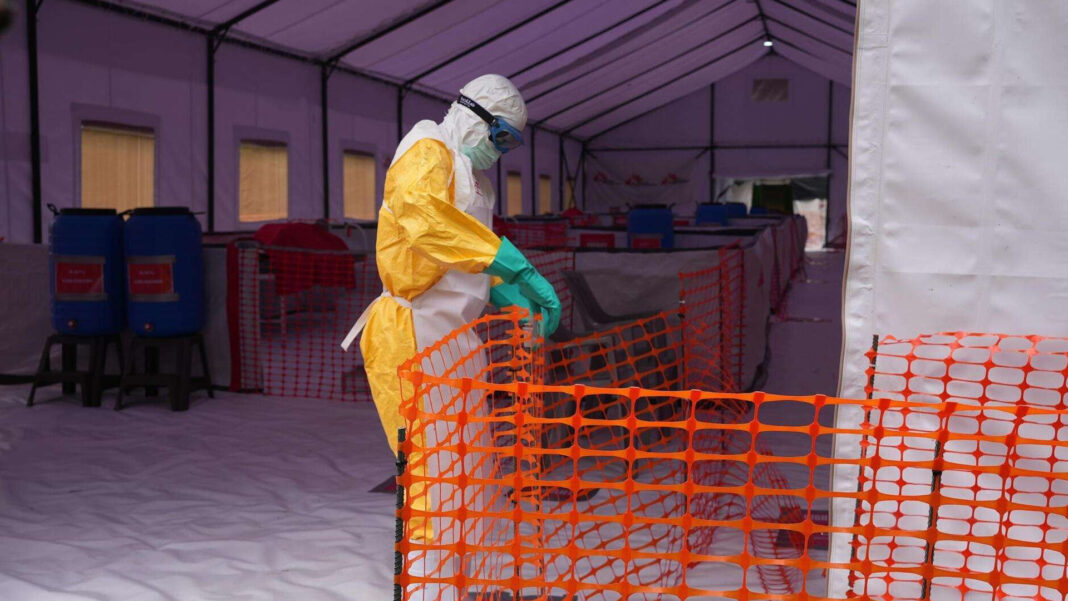
Anticipating potential spillover effects from the DRC and Uganda, humanitarian organizations had already begun laying the groundwork for a swift defense. Earlier this year, MSF established specialized simulation and training centers in regions such as Kajiado County and Mombasa, preparing hundreds of local health care workers and emergency responders.
These facilities focus heavily on infection prevention and control, correct usage of personal protective equipment (PPE), and the safe isolation protocols necessary to manage suspected cases. Furthermore, teams have deployed along high-risk border regions like Busia to help local clinics establish isolation wards.