
Somalia is expected to launch its first satellite into space in 2027. The ambitious aerospace initiative forms the core of an expanding strategic partnership with Türkiye, utilizing a dedicated spaceport and research installation currently under active construction in the Warsheekh district of the Middle Shabelle region.
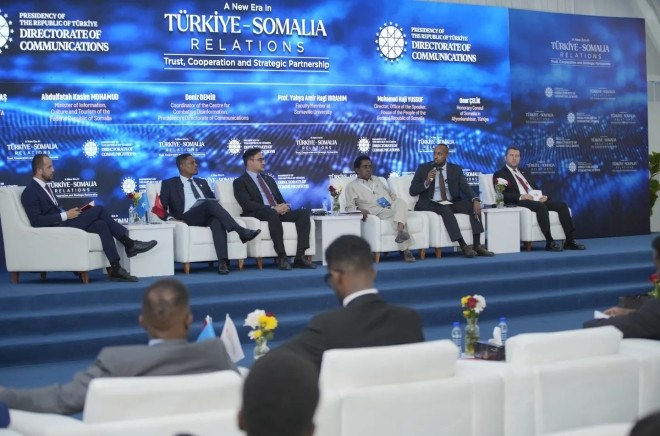
The announcement was made by outgoing Turkish Ambassador to Somalia Alper Aktaş during a farewell ceremony in Mogadishu, attended by senior government officials and diplomats. Addressing the assembly, Ambassador Aktaş emphasized how far Somalia had progressed following years of conflict and institutional recovery.
“If I had said five or 10 years ago that one day Somalia would launch a satellite into space, many people might have laughed at us,” Aktaş noted, framing the development as visible proof of the country’s advancing security, diplomatic stability, and state-building efforts.
The selection of Somalia’s Indian Ocean coastline for the $350 million spaceport project stems from a combination of strategic alliance and physics. Situated directly along the equator, Somalia offers optimal geographic conditions for orbital rocket launches.
Spacecraft launched from equatorial latitudes harness maximum planetary rotational velocity—approximately 1,670 kilometers per hour—which drastically reduces fuel requirements while optimizing payload capacities. Furthermore, the designated site in Warsheekh provides a clear eastward launch trajectory over the expanse of the Indian Ocean, ensuring that spent rocket stages and boosters jettison safely away from populated landmasses and commercial flight corridors.
The construction of the Warsheekh spaceport, overseen in collaboration with the Turkish Space Agency and private aerospace partners, aims to grant Ankara independent access to space while enabling Somalia to establish sovereign satellite capabilities.
For Mogadishu, acquiring domestic satellite coverage is projected to generate immediate operational benefits across critical socioeconomic sectors. Federal officials highlight that dedicated orbital technology will enhance climate monitoring and meteorological precision, providing early warning systems against the destructive cycles of drought and flash flooding that frequently impact agricultural yields.
Beyond environmental tracking, sovereign satellite networks will bolster maritime domain awareness along Somalia’s 3,300-kilometer coastline—the longest in mainland Africa—aiding in maritime anti-piracy operations, illegal fishing surveillance, and offshore resource protection. The communication satellites are also slated to improve civil aviation safety, support rural digital infrastructure, and provide secure communication lines for national security agencies.
The satellite program represents the high-tech frontier of a much broader bilateral partnership that began in 2011 with humanitarian assistance following President Recep Tayyip Erdoğan’s historic visit to Mogadishu. Over the past decade and a half, Turkish involvement has expanded into civil infrastructure, healthcare, defence training, offshore energy exploration, and trade.
During his address, Ambassador Aktaş reaffirmed that Turkish-Somali ties extend far beyond aerospace. Turkish research vessels are actively conducting offshore oil and gas exploration in Somali territorial waters, while commercial fishing fleets are set to arrive in October to help commercialize the nation’s blue economy. Further technical cooperation frameworks cover telecommunications regulation, cybersecurity, spectrum management, and road infrastructure projects.