Rwandan President Paul Kagame has raised serious concerns regarding the sluggish implementation of the African Continental Free Trade Area (AfCFTA), warning that the continent is falling short of turning the ambitious framework into a true driver of economic integration.
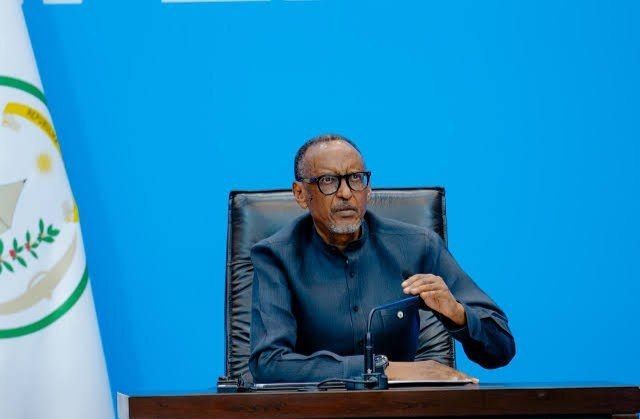
Speaking during a press conference on August 24, 2026, President Kagame emphasized that his frustration stems not from the conceptual creation of the historic trade agreement, but rather from the lack of urgency and speed with which member states are executing it. “I am concerned, but I am also happy that this effort was ever put in place. The frustration is just about how fast and how well we can move forward,” Kagame stated.
The AfCFTA agreement represents a monumental step for the continent, having been officially adopted and signed by 44 nations during the 10th Extraordinary African Union Summit held in Kigali in March 2018. The landmark pact officially entered into force in 2019, with commercial trading under the agreement commencing in January 2021.
Designed to create a single continental market for goods and services, the agreement aims to progressively remove tariff and non-tariff barriers to trade, significantly increase intra-African trade, expand market opportunities for African businesses, and reduce the continent’s heavy dependence on external markets.
While acknowledging the significance of establishing the framework, Kagame noted that translating a concept into reality requires rigorous, sustained effort—an area where he believes the continent is currently faltering.
“It was a good beginning of a hard task that we had to carry out. But doing it brings a lot more than creating a concept around it, and that is where we have fallen short as a continent. We are not moving at the right pace,” he warned.
The Rwandan leader urged African governments to use this slow progress as a catalyst for critical self-examination. He stressed that nations need to re-evaluate their initial motivations and question why execution has failed to match the grand ambitions that inspired the pact’s creation. “We need to look back and ask why we created it in the first place. If we fully understand the benefits, how can we falter along the way in doing what we are supposed to do?” Kagame asked.
He called for collaborative dialogue to identify the underlying reasons why certain member states have lagged in fully contributing to the implementation process. According to Kagame, addressing these systemic roadblocks requires mutual support and cooperative problem-solving to overcome the challenges holding nations back.
”It requires us to continue nurturing each other and find out the reasons some people have for not fully contributing and working as they should. That can cause frustration,” he added.
Despite the visionary scope of the AfCFTA, practical implementation continues to encounter persistent hurdles. Key obstacles include entrenched non-tariff barriers, divergent national regulations, severe infrastructure constraints, and limited productive and manufacturing capacities in several member countries.
Concluding his remarks, Kagame acknowledged that stakeholders who have invested heavily in the initiative have a right to feel frustrated, but he maintained that complaints alone are insufficient.
“Africans should be frustrated, maybe those who really put a lot of weight on all these efforts, but we cannot always just complain. We have to come together and do what we should do, because it is not as easy as just saying it,” Kagame concluded.