Facing the deepest cuts to international health financing in a generation, African nations are aggressively shifting strategies to prioritize domestic resource mobilization, health taxes, and regional self-reliance.
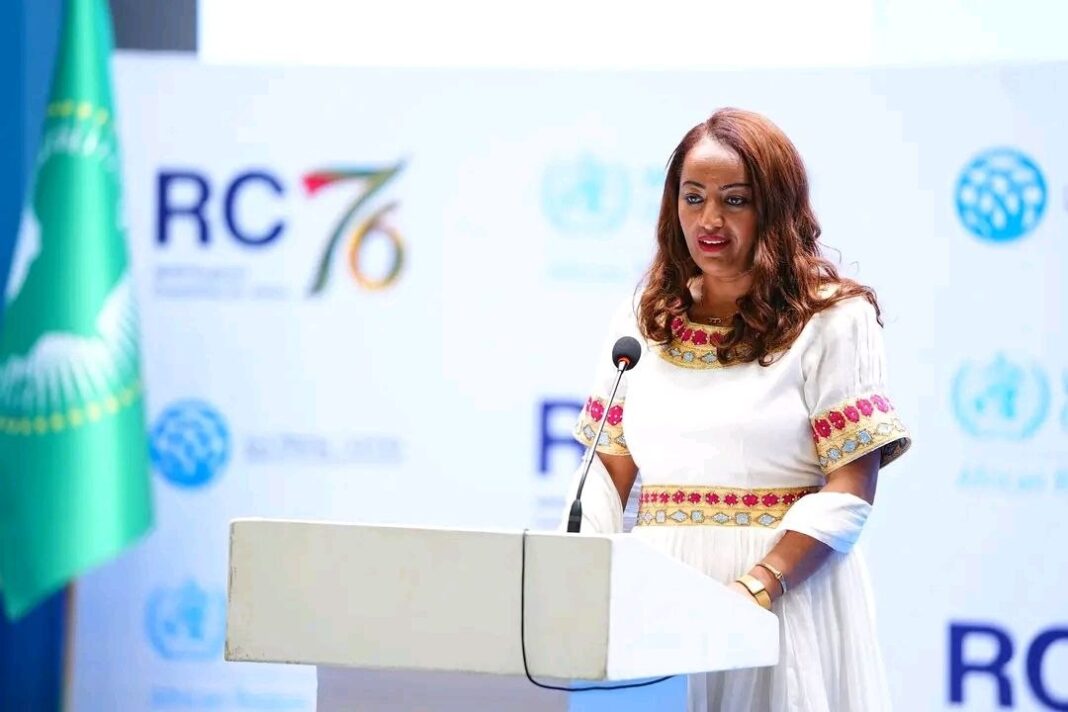
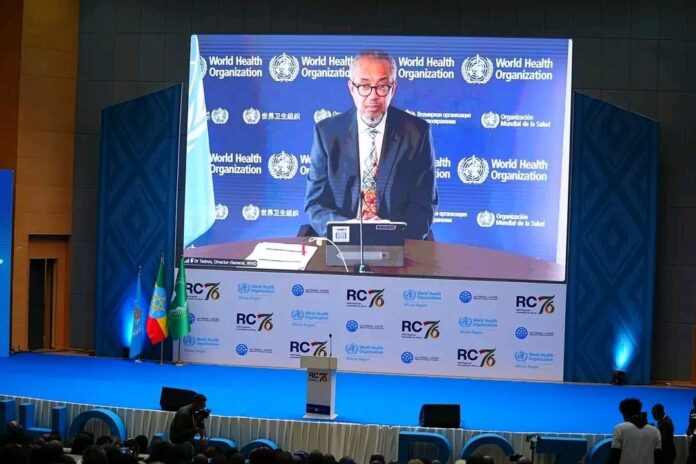
World Health Organization (WHO) Director-General Dr. Tedros Adhanom highlighted thisl transition during his address to at the 76th session of the WHO Regional Committee for Africa in Addis Ababa, emphasizing that the continent must move away from aid dependency and build permanent health sovereignty.
The abrupt contraction of global health assistance created severe strains across the continent almost overnight. Critical life-saving programs lost their footing, forcing clinic closures and triggering widespread job losses for healthcare workers. Initiatives targeting HIV, tuberculosis (TB), malaria, neglected tropical diseases (NTDs), and maternal and newborn care bore the heaviest burdens.
Despite these steep financial headwinds, African health systems demonstrated remarkable resilience. Major disease-elimination milestones were achieved in eight countries, including Algeria, Burundi, Cabo Verde, Guinea, Kenya, Mauritius, and Senegal. Furthermore, over 28 million doses of donated NTD medicines were distributed, and 21.7 million people living with HIV maintained uninterrupted treatment, with nations like Botswana, Eswatini, and Zimbabwe hitting crucial 95-95-95 targets.
With international aid proving increasingly volatile, governments are tapping into home-grown fiscal solutions. Dr. Tedros spotlighted progressive domestic reforms enacted last year, noting that 15 countries successfully reformed tobacco taxation. Notable examples of financial independence include South Africa, which now funds three-quarters of its HIV response domestically, and Nigeria, which has scaled up domestic allocations for TB control.
This pivot addresses a glaring systemic imbalance: Africa routinely loses an estimated 90 billion dollars annually to illicit financial flows—surpassing the 74 billion dollars it received in official development assistance. Furthermore, external debt servicing claims massive public revenues, with many nations spending more on interest payments than on public health. By curbing illicit capital flight, securing fair debt restructuring terms, and fully implementing health taxes on harmful commodities, leaders argue the continent can comfortably secure more than enough capital to fund its own healthcare needs.
To solidify this transition, the regional committee advanced comprehensive agendas tackling structural workforce shortages, medical product regulation, and a decade-long roadmap to shift entirely toward domestically financed health architectures. Local manufacturing capacity received a major boost as Ethiopia and Mozambique attained WHO regulatory maturity level three, complementing ongoing work from mRNA technology hubs.