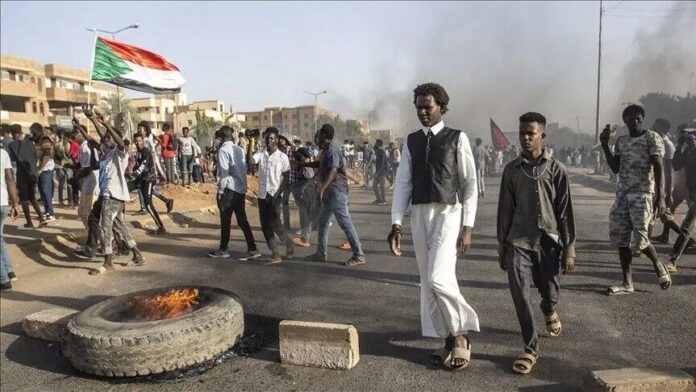
A damning new report from the United Nations Human Rights Office has exposed how Sudan’s protracted three-year conflict has morphed into a self-sustaining “war economy,” severely destabilizing the nation and embedding grave human rights risks into global supply chains.
As the devastating war between the Sudanese Armed Forces (SAF) and the paramilitary Rapid Support Forces (RSF) enters its fourth year, the UN warns that the belligerents have fundamentally altered their operational logic. Moving beyond traditional battlefield tactics, both factions have increasingly institutionalized the exploitation of territory, the taxation of vital trade routes, and the monopolization of key commodities to bankroll their military ambitions.
The report singles out the trade in gum arabic—a critical natural stabilizer used extensively in global food, beverage, pharmaceutical, and cosmetic industries—as a prime case study of this systemic exploitation. Prior to the outbreak of hostilities in April 2023, Sudan was the world’s undisputed leader in this sector, accounting for approximately 70% to 80% of global crude exports.
The UN investigation reveals that this essential value chain has been fractured by the conflict. Exports originating from areas under the control of the Sudanese Armed Forces are largely directed toward Port Sudan, while significant volumes from RSF-held territories are increasingly rerouted through illicit cross-border smuggling networks.
This fragmentation obscures the origins of the product, creating a high risk that international corporations are inadvertently funding armed groups through the purchase of “relabeled” or illegally trafficked goods. The human cost of this trade is profound, with the report documenting widespread reports of extortion, arbitrary detention, and violent looting targeting those working within the industry.
UN High Commissioner for Human Rights Volker Türk has issued a sharp rebuke to the international community and private sector alike. “Sudan’s vast wealth of natural resources should benefit its people,” Türk stated. “Distressingly, what we are seeing today is anything but that. In fact, this wealth is only serving to undermine human rights and drive conflict.”
The UN is demanding an immediate shift in how companies engage with conflict-affected regions. Türk asserted that “business as usual” is no longer an option, calling for rigorous, conflict-sensitive human rights due diligence. Specifically, the UN urged corporations and regulatory bodies to implement stronger traceability measures, enhance scrutiny of trade intermediaries, and verify documentation to ensure that global supply chains do not become unintended lifelines for those sustaining the violence.
With the conflict having already claimed an estimated 200,000 lives and displaced over 11 million people, the UN’s warning serves as an urgent reminder that economic engagement in fragile states carries significant moral and legal responsibilities. As famine conditions worsen and the humanitarian crisis deepens, the international community faces increasing pressure to disrupt the financial networks that keep the war in Sudan alive.