At the 11th Our Ocean Conference (OOC11) held in Mombasa, Kenya, the United States government and Kenyan officials jointly unveiled a historic agreement. This partnership aims to curb the growing global threat of Illegal, Unreported, and Unregulated (IUU) fishing, which poses a severe risk to marine resources. Beyond financial support, the new framework introduces a strict measure: the imposition of visa restrictions on foreign nationals who participate in or benefit from these illicit operations.
According to the US Department of State, the US has put forward 24 new commitments worth over $96 million (approximately KSh 12.4 billion) dedicated to advancing maritime security and protecting ocean ecosystems. Out of this total budget, over $52 million is specifically allocated to directly counter IUU fishing activities that threaten communities and marine life across every ocean basin worldwide.
This initiative, announced at the Mombasa summit by Ruth Perry, the US Deputy Assistant Secretary for Ocean, Fisheries, and Polar Affairs, has sparked significant discussion among global maritime law enforcement agencies. For the first time in history, visa restrictions will be imposed on foreign nationals who are responsible for, complicit in, facilitating, or benefiting from IUU fishing and related activities, preventing them from entering the United States.
This measure directly impacts individuals and investors from nations flagged for deploying illegal fishing fleets into the territorial waters of other countries. Illegal, unreported, and unregulated fishing encompasses vessels entering marine zones without valid licenses, hunting in protected or restricted areas, using banned or environmentally destructive gear, and deliberately hiding their catches from government regulators.
The “unreported” aspect of this practice is considered particularly dangerous. Because fishers misrepresent or conceal the volume, species, and precise location of their catch, it becomes nearly impossible for regulatory bodies to manage fish populations sustainably and maintain ecological balance. As a result, this illicit industry inflicts tens of billions of dollars in economic losses globally each year.
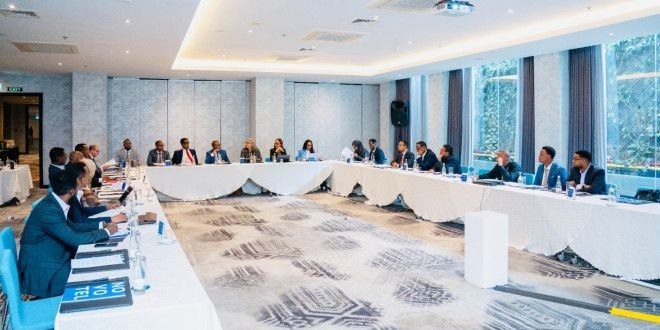
The 11th Our Ocean Conference marks the very first time this landmark event has been hosted on the African continent, drawing government leaders, businesses, and civil society organizations from over 100 countries. The conference concluded with 320 new commitments worth a combined $6.4 billion, signaling Africa’s growing leadership in global ocean governance.
Among the major announcements at the summit, the World Bank Group pledged to invest $1 billion over the next two years to help developing countries build sustainable and resilient blue economies. Canada committed $682 million to its Small Craft Harbours Program to support coastal and rural communities, while the United States pledged $96 million to strengthen maritime security and implement visa restrictions. The host nation, Kenya, announced 42 commitments worth an estimated $1 billion covering marine protected areas, fisheries monitoring, and climate finance.
As part of its host commitments, Kenya allocated $200 million to install electronic monitoring systems across all industrial fishing vessels operating within its waters. This step carries immense economic weight for the continent, where illegal, unreported, and unregulated fishing costs African economies between $11 billion and $13 billion annually in severe financial losses and debt. Hassan Ali Joho, Kenya’s Cabinet Secretary for Mining and the Blue Economy, set the tone for the event by stating that the conference is about turning words into commitments, commitments into action, and action into a proud legacy for future generations.