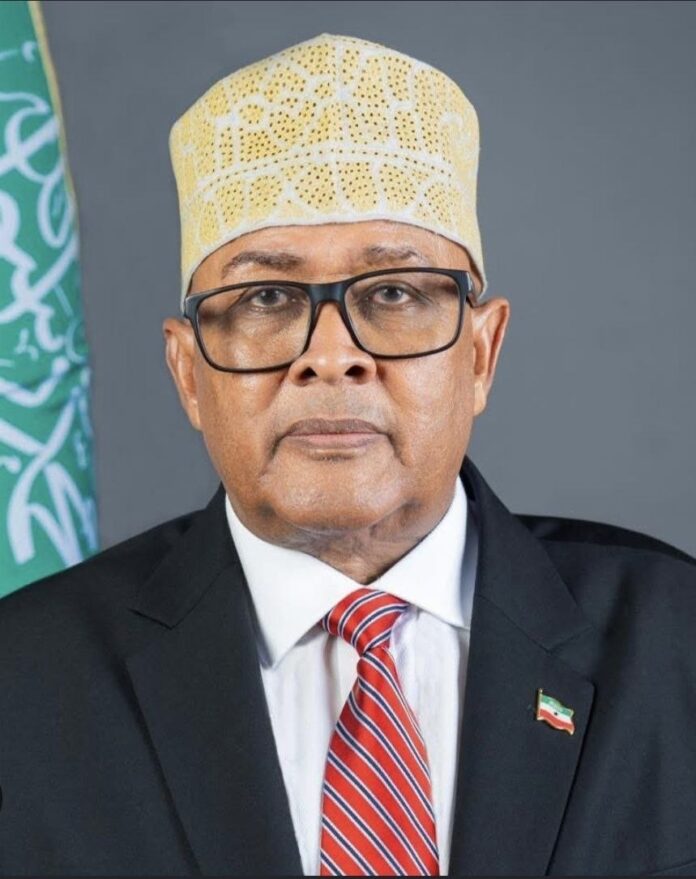
Somaliland President Abdirahman Mohamed Abdullahi (Irro) announced that his administration is actively maintaining open diplomatic channels with the United States and Ethiopia to secure further international recognition. The President revealed this during an interview with the television network i24NEWS in Jerusalem on June 18, 2026. President Irro’s official working visit follows Israel’s formal decision to recognize Somaliland late last year.
When asked about communication channels with US President Donald Trump regarding diplomatic recognition for the country, President Abdullahi stated, “We have open channels.” He also confirmed that regional nations—specifically Ethiopia, the United Arab Emirates (UAE), and Kenya—remain top priorities for Hargeisa’s foreign policy. The President added, “They are [priorities], and we have open channels for them as well.”
This new diplomatic push occurs as Somaliland establishes its presence and strengthens its footing in Jerusalem by opening an embassy. During the interview, President Abdullahi addressed the historical context of bilateral relations, noting that Israel initially recognized Somaliland on June 26, 1960, when the territory gained its independence from British colonial rule.
Israel recognized Somaliland for a second time on December 26, 2025, following a written request sent by Hargeisa to 193 nations in May of that year. According to President Abdullahi, Israel acted as the sole respondent to the request, basing its foreign policy decision on regional realities.
Hargeisa is executing its diplomatic strategy not only by opening an embassy in Jerusalem but also by offering strategic access to the Berbera Port, which serves as a vital trade gateway for the Horn of Africa, including Ethiopia. President Abdullahi firmly rejected descriptions of Somaliland as a “breakaway region,” emphasizing that the territory had achieved its sovereignty before Somalia even formed its government in 1960.
To strengthen diplomatic relations between the two sides, Ethiopia and Somaliland previously signed a Memorandum of Understanding (MoU) on January 1, 2024, to establish framework agreements for maritime access and political recognition.
However , mounting regional diplomatic pressure from the African Union and subsequent Turkish-mediated talks between Ethiopia and Somalia under the Ankara Declaration halted its implementation. This situation has forced Ethiopia to reassess other strategic options for access to the Red Sea.