The United Nations World Food Programme (WFP) has secured a EUR 3 million (approximately 5 billion Ugandan Shillings) contribution from the European Union’s Civil Protection and Humanitarian Aid Operations (DG ECHO). The funding is earmarked to provide critical, life-saving food and nutritional assistance to over 336,000 vulnerable and newly arrived refugees currently hosted across Uganda.
Delivered in partnership with the Office of the Prime Minister (OPM) and the United Nations High Commissioner for Refugees (UNHCR), the financial injection arrives at a critical juncture.
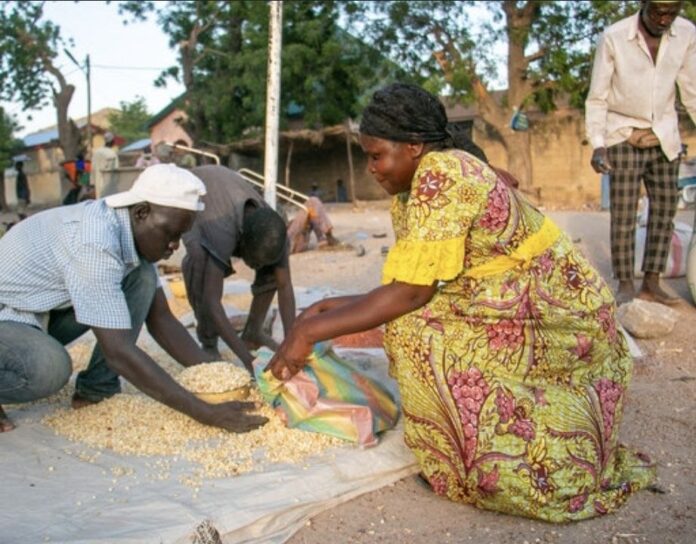
The Horn of Africa and Great Lakes regions continue to experience heightened displacement driven by geopolitical instability, climate shocks, and conflict. The primary beneficiaries of this joint EU-WFP intervention include recently displaced populations fleeing volatile conditions in the Democratic Republic of the Congo (DRC), South Sudan, and Sudan.
Departing from traditional, logistical-heavy physical food distributions, the humanitarian response is prioritizing digital cash transfers. By utilizing mobile money platforms and agency banking services, the initiative directly injects liquidity into refugee settlements. This strategy is designed to offer maximum flexibility, dignity, and autonomy to displaced families, allowing them to purchase goods based on their immediate, self-determined household requirements.
Liam Kelly, who oversees EU humanitarian aid programmes in Uganda, emphasized the multifaceted economic benefits of cash-based interventions. According to Kelly, cash assistance functions as a dual-purpose tool that not only stabilizes vulnerable households but also serves as a catalyst for local economic development.
“Because cash assistance is flexible and multi-purpose, it empowers families to address their most urgent needs while also strengthening local markets and businesses,” Kelly stated. “By enabling people to purchase goods and services within their communities, cash assistance contributes to economic recovery, promotes financial inclusion, builds resilience, and helps lay the foundation for long-term stability.”
Beyond financial efficiency and market stimulation, the transition to digital cash infrastructure serves an essential biosecurity function. In the context of the ongoing Ebola outbreak affecting parts of the region, minimizing physical convergence at traditional aid distribution points has become a matter of public health urgency.
The digital payment ecosystem enables refugees to receive their monthly entitlements remotely. By mitigating crowding and facilitating contactless transactions, the system significantly curtails the potential transmission vectors of infectious diseases. This ensures that essential food security operations can proceed uninterrupted without compromising the health of the refugees or host community banking agents.
Uganda remains the largest refugee-hosting nation on the African continent, sheltering more than two million displaced individuals across 13 designated settlements. The sheer scale of this population has placed unprecedented pressure on national infrastructure, local ecosystems, and international aid budgets, necessitating an operational pivot toward leaner, high-impact delivery models.
Marcus Prior, WFP’s Acting Country Representative in Uganda, framed the EUR 3 million EU contribution as a core pillar of a broader, systemic overhaul in humanitarian logistics.
“Cash transfers are at the heart of a more efficient and people-centred humanitarian response, empowering refugees by putting choice in their hands,” Prior remarked. “As part of the broader humanitarian reset, WFP is committed to prioritising assistance based on needs, increasing efficiency in how we deliver support, and working closely with local partners to strengthen Uganda’s refugee response.”