Ugandan authorities have significantly tightened border controls with the Democratic Republic of Congo (DRC) to prevent the spread of the Ebola virus into their country. This sudden and stringent decision has left thousands of traders operating along the border facing massive financial losses, while long convoys of commercial cargo trucks have been forced to a complete standstill without clearance to cross.
Among the affected business owners is Leah Masika, a Ugandan trader whose large consignment of plantains imported from Congo is stuck in transit. Her cargo, destined for the Ugandan market, has been sitting at the border for days. She tearfully explained that the produce has already started to leak water and will spoil completely within hours if a solution is not found.
Masika and many other traders are waiting at the Mpondwe border post for clearance from authorities to let their trucks pass, but the new emergency regulations aimed at containing the outbreak have crippled all cross-border movement. “Our things are here rotting,” she said in frustration. “We are begging them to help us and open the border; we will not go back to Congo.”
On May 28, roughly two weeks after Congo officially declared an Ebola outbreak in its eastern Ituri province, Uganda partially closed its western border. Initially, exceptions were made only for emergency situations, including humanitarian aid, medical outbreak responders, and critical security personnel. However, as the spread of Ebola in eastern Congo appeared to outpace the initial containment efforts in recent days, authorities in Uganda’s frontier district of Kasese aggressively tightened enforcement.
This intensification of border controls has triggered a truck queue stretching over a mile on the Ugandan side. According to Sylvia Asiimwe, a clearing agent at the border, at least seven of the stranded trucks are carrying frozen fish imported from China destined for the Congolese cities of Beni and Butembo. She pointed out that while those specific Congolese towns are located in North Kivu province rather than the Ebola epicenter of Ituri, the blanket enforcement of the restrictions has halted everything equally, risking a massive waste of capital.
Mpondwe is Uganda’s premier border post for informal exports, handling trade valued at an estimated $131 million in 2023. Following the recent closure, local shops have been shuttered, and young casual laborers, deprived of their daily work, sit idly on the roadsides in silence.
While the World Health Organization (WHO) has declared the current Ebola outbreak in Congo a public health emergency of international concern, the UN agency generally discourages border closures. However, it also acknowledges that neighboring nations face an exceptionally high risk of cross-border contagion.
Defending the aggressive safety measures, Arafat Bwambale, a surveillance officer for Kasese, stated:”With the movement of cargo and trucks comes the mobility of people, and we want to reduce that human interaction to the absolute minimum right now.”
Officials are currently working around the clock to stop Congolese nationals from entering Uganda through more than two dozen informal footpaths that snake past the official Mpondwe border checkpoints.What makes this particular outbreak deeply worrisome to health experts is that the virus spreading in Congo is the rare Bundibugyo strain. Alarmingly, all currently available and approved Ebola vaccines and therapeutic treatments are ineffective against this specific type of the virus.
Uganda has already confirmed 15 Ebola cases within its borders. All of these cases have been epidemiologically linked to the outbreak in the neighboring DRC, after several Congolese nationals crossed over to seek medical treatment in the capital city of Kampala before an official outbreak had even been declared. Experts believe the disease had been spreading undetected for days or weeks prior to the official declaration on May 15.
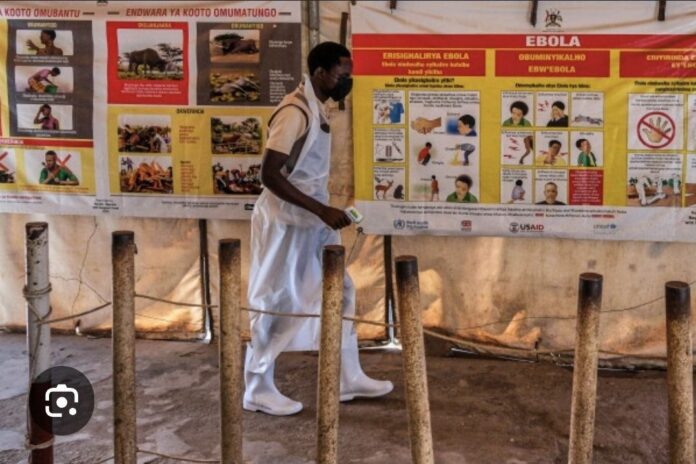
Because Uganda has battled multiple Ebola outbreaks of its own since 2000 (including a devastating initial outbreak that killed more than 200 people), authorities are treating the situation with extreme caution.Ebola spreads through direct contact with the bodily fluids (such as sweat, blood, feces, or vomit) of an infected or deceased patient. Consequently, rigorous contact tracing and immediate isolation remain the primary pillars to halting transmission.
Currently, the nearest referral hospital in Kasese features a specialized isolation unit and is equipped with a modern laboratory capable of returning diagnostic test results within six hours. While samples collected from 41 suspected cases in the Kasese area recently tested negative for the hemorrhagic fever, authorities show no signs of easing up. In fact, local Ebola task forces are currently drafting even stricter frameworks to systematic regulate or further limit incoming cargo trucks—a move that will undoubtedly deepen the economic strain on small-scale traders whose livelihoods depend entirely on the Mpondwe route.