Despite boasting robust economic expansion with an estimated real GDP growth of 9.2 percent for the 2024/25 fiscal year according to International Monetary Fund (IMF) figures, Ethiopia continues to grapple with a deepening humanitarian emergency. According to the World Food Program’s (WFP) July Country Brief, these macroeconomic gains have failed to trickle down to vulnerable communities, leaving millions caught in the crosshairs of conflict, climate shocks, and severe economic distress.
Projections from the Famine Early Warning Systems Network (FEWS NET) indicate that more than 15 million people across Ethiopia require urgent humanitarian food assistance. The nation remains among the top five countries globally with the largest populations facing acute food insecurity. The most acute suffering is heavily concentrated among internally displaced persons (IDPs) and conflict-weary communities, particularly within the Tigray and Amhara regions, alongside populations affected by recurring drought and structural inflation.
Displacement remains a primary driver of this ongoing crisis. WFP reports that Ethiopia currently provides refuge to approximately 1.1 million refugees—including recent influxes fleeing conflicts in Sudan and South Sudan—while an estimated 1.9 million individuals remain internally displaced.
These vulnerabilities are further compounded by sudden-onset climate emergencies, such as severe flash floods and prolonged dry spells, as well as broader macroeconomic tremors linked to supply chains and conflict in the Middle East.
Regional economic pressures have severely disrupted domestic food systems. Acute fuel shortages and major disruptions in fertilizer supplies have driven up food prices, throwing dark clouds over prospects for upcoming agricultural seasons. Consequently, malnutrition rates remain critically high, threatening the health and development of millions of children alongside pregnant and breastfeeding women.
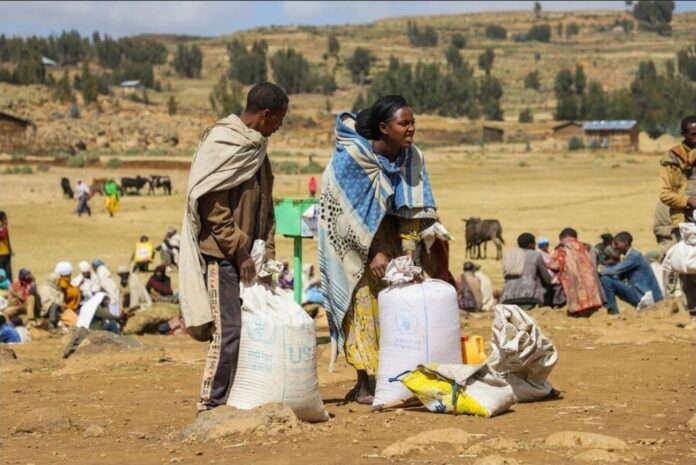
During its June operations, the WFP successfully reached 1.8 million food-insecure individuals, distributing 10,700 metric tons of food supplies and allocating USD 4.5 million in cash assistance.
However, humanitarian operations face severe operational bottlenecks. In parts of the Somali and Oromia regions, food distributions and cash-based interventions faced logistical delays or temporary suspensions due to localized communal clashes, security assessments, and severe transport constraints driven by fuel scarcity.
Resource scarcity has also forced the agency to scale back assistance, maintaining cereal rations at a meager 60 percent of standard allotments to preserve pipeline continuity. Similarly, treatment programs for moderate acute malnutrition fell short of targets in regions like Amhara due to restricted physical access and transport delays caused by heavy rains across Southwestern Ethiopia, Sidama, and Central Ethiopia.
WFP’s overarching Ethiopia Country Strategic Plan demands USD 655 million, of which only USD 220 million has been secured. The agency estimates an immediate funding requirement of USD 182 million to sustain life-saving food distributions, nutritional programs, and resilience initiatives from August 2026 through January 2027.