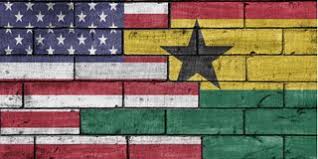
Ghana has declined to sign a proposed bilateral health agreement with the United States, citing concerns over provisions requiring the sharing of sensitive health data, according to a source familiar with the negotiations.
The decision marks another setback for Washington’s efforts to reshape its foreign aid framework under the “America First Global Health Strategy.” The initiative encourages lower-income countries to assume greater responsibility for tackling diseases such as HIV/AIDS, malaria, tuberculosis, and polio, while gradually reducing reliance on external assistance.
Negotiations between Accra and Washington began in November, with the proposed deal expected to provide $109 million in U.S. health assistance over five years. However, talks reportedly stalled as Ghana raised objections to data-sharing requirements embedded in the agreement.
“The discussions started off as fairly routine, but there was increasing pressure toward the end,” the source said, adding that the United States had set an April 24 deadline for concluding the deal. Ghana ultimately determined it could not accept the terms.
Officials from Ghana’s government and foreign ministry did not respond to requests for comment. The U.S. State Department declined to disclose details of the negotiations but reiterated its commitment to strengthening bilateral ties.
“We continue to look for ways to strengthen the partnership between our two countries,” a State Department spokesperson said.
Ghana’s position mirrors similar developments elsewhere in Africa. Earlier this year, Zimbabwe also withdrew from comparable talks over data concerns, while in Kenya, a court temporarily halted implementation of a related agreement following a legal challenge by a consumer protection group.
U.S. government data shows that Ghana received $219 million in foreign assistance in 2024, including $96 million allocated to the health sector. This was prior to broader aid reductions introduced under the current U.S. policy shift, which included the dismantling of the U.S. Agency for International Development last year.
As of this week, the United States has signed 32 agreements under the global health strategy, representing a combined $20.6 billion in funding. Of that amount, $12.8 billion is contributed by the U.S., while $7.8 billion is expected from partner countries.