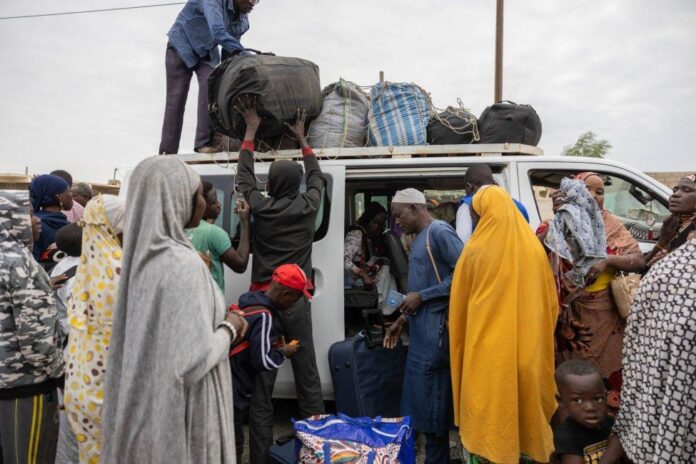
As the devastating conflict in Sudan enters its third year, the International Organization for Migration (IOM) has announced that nearly four million people who were displaced across the country have returned to their places of origin. However, these returnees are now facing a secondary struggle for survival against the backdrop of war-torn infrastructure.
According to the organization’s data, an additional two million displaced persons are expected to return to the capital, Khartoum, in 2026 alone. This massive influx is expected to place an unbearable strain on the city’s water, electricity, and health facilities, which were already heavily damaged by heavy artillery and airstrikes.
IOM Deputy Director General Sung Ah Lee, reflecting on her recent visit to Khartoum, described the situation as a choice between a glimmer of hope and renewed suffering. She noted that she witnessed large numbers of people returning to areas where essential services—such as clean water and healthcare—have been almost entirely decimated.
While many are returning due to a perceived improvement in local security, others have been driven back by the increasingly unbearable economic pressures and harsh living conditions in neighboring countries’ refugee camps. Consequently, many returnees are forced to live in ruined homes without any basic amenities.
Beyond the capital, a significant number of people are returning to Al Jazirah state. Although this region serves as Sudan’s primary agricultural hub, the destruction of irrigation systems and farming equipment during the conflict has prevented returnees from resuming production. Lee warned that farmers are returning to fields where the tools of their livelihood have been destroyed, threatening food security at a critical moment for the nation.
The humanitarian crisis in Sudan remains staggering in scale. Since the conflict between the Sudanese Armed Forces (SAF) and the Rapid Support Forces (RSF) erupted in April 2023, nearly 12 million people have been uprooted from their homes.
More than 4.5 million fled to neighboring countries like Egypt, South Sudan, and Chad, while approximately nine million remain internally displaced. Eastern and northern states, such as Kassala, Gedaref, and Red Sea, have carried the heaviest burden of hosting these families, stretching their local resources and infrastructure to the absolute limit.
The IOM concluded that international humanitarian funding for Sudan remains severely inadequate. Without urgent investment to restore essential services, rebuild infrastructure, and revive local livelihoods, the return of displaced persons will remain unsustainable, risking a further deepening of the humanitarian catastrophe.