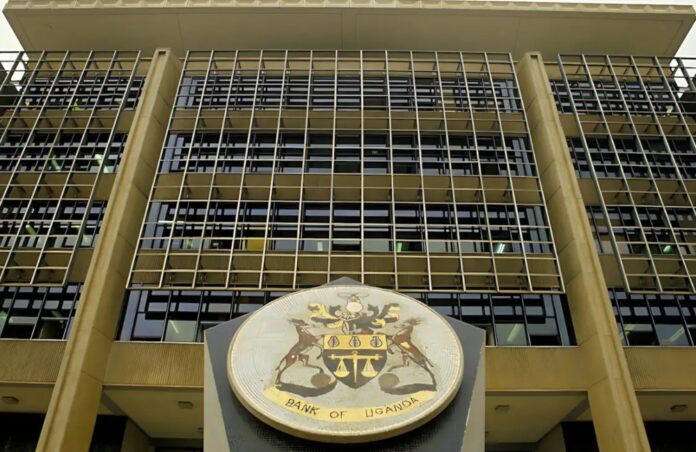
The Bank of Uganda (BoU) has officially launched an advanced data framework designed to illuminate economic activities that have historically remained in the shadows. Developed in collaboration with the International Fund for Agricultural Development (IFAD), this new system aims to capture informal and non-cash transfers that previously bypassed formal financial channels.
For decades, a significant portion of Uganda’s economic activity—particularly personal remittances and small-scale trade—has operated through informal means, such as hand-carried cash or unregulated community networks.
The central bank’s new interactive Remittance Dashboard and reporting framework will transform this landscape by consolidating data from various service providers, including fintech companies and mobile money operators.
During a press briefing in Kampala, Deputy Governor Augustus Nuwagaba highlighted the framework’s immediate impact, noting that by monitoring these informal financial lines, the bank has already identified an additional $1 billion in previously unrecorded transfers.
This discovery has pushed the total recorded remittances for 2025 to approximately $2.5 billion, proving that the informal economic sector is far more expansive than earlier estimates suggested.
A primary goal of this framework is to track the rapid transition toward digital and “cashless” payment methods. Current data indicates that 73% of inflows into the country are now conducted through digital channels, with mobile money accounting for a dominant 61% share.
Despite this digital surge, informal transfers remain a challenge, prompting the Bank of Uganda to integrate its Annual Personal Transfers Survey with the new digital dashboard to capture unrecorded border trade, in-kind transfers (such as food and medicine), and trust-based peer-to-peer networks.
The central bank emphasized that while the current data will undergo further refinement, moving to this system is essential for evidence-based economic planning. By accurately understanding how money enters the country and its distribution across various districts, the government can better stabilize exchange rates and design policies that reduce transaction costs for rural residents.
Milly Isingoma, the Bank’s Director of Economic Statistics, stated that the system provides granular details on every financial movement. She noted that the bank will no longer rely on estimates, as they can now monitor the frequency, volume, and geographic distribution of funds. This transparency allows the bank to identify systemic weaknesses and provide targeted support to improve financial inclusion where it is needed most.