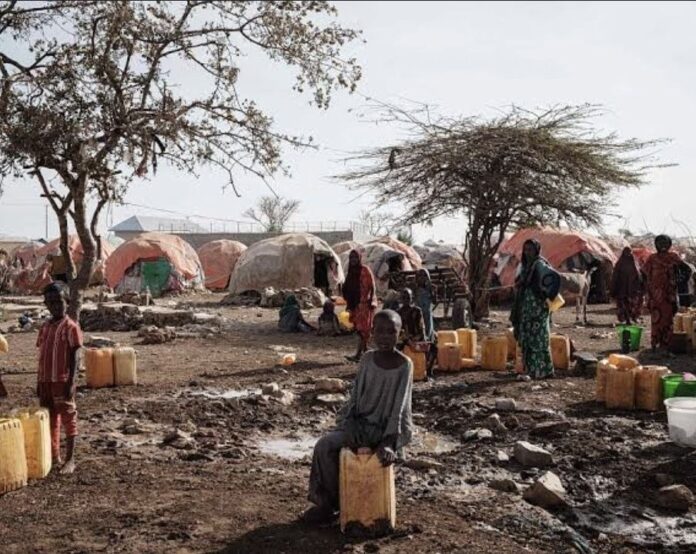
The United Nations (UN) has announced the release of $10 million in emergency funding to prevent a catastrophic famine and provide immediate relief in Somalia. The convergence of a prolonged and severe drought, escalating conflicts, and global food price hikes has left millions of people on the brink of starvation in Somalia.
According to Tom Fletcher, the UN Humanitarian Chief, this newly allocated budget will serve as a vital lifeline for 640,000 of the most affected citizens. However, the chief warned that the window of opportunity to prevent a devastating famine is rapidly narrowing. The organization is racing against time to reach the most vulnerable populations before the crisis passes a point of no return. This $10 million package is dedicated to delivering essential nutritional support, emergency healthcare, clean drinking water, and food supplies to the hardest-hit communities.
The current humanitarian emergency in Somalia is deeply alarming. Recent data indicates that nearly one-third of all Somali households face severe food insecurity, with internally displaced persons (IDPs) and rural communities bearing the brunt of the crisis. Six million people—representing one-third of the country’s entire population—are currently confronting acute food insecurity, while 1.9 million are already living under catastrophic emergency conditions.
According to a recent Comprehensive Food Security and Vulnerability Analysis (CFSVA) report, Somali households rely on market purchases for 68% of their food acquisition. This high dependency leaves families extremely vulnerable to food price spikes, especially considering that only 10% of households report having any cash savings.
A massive surge in internal displacement has further aggravated the crisis. Data from the UN Office for the Coordination of Humanitarian Affairs (OCHA) shows that severe drought conditions in northern and eastern regions have left 2.5 million people in urgent need of assistance. Out of these, 900,000 are concentrated in the worst-affected districts. Since the beginning of 2026, more than 500,000 people have been forced to flee their homes, joining an already massive population of internally displaced persons whose resources were completely exhausted.
While the crisis spans across the entire country, the United Nations has identified specific “red zones” where the threat of famine is a stark and realistic danger. The Bay and Bakool regions in South West State, particularly agropastoral communities, are among the most heavily exposed areas. It is projected that nearly 6.5 million people will experience Crisis or worse levels of food insecurity in 2026, and approximately 1.84 million children under five are expected to suffer from acute malnutrition.
During his recent visit to Somalia, UN Humanitarian Chief Tom Fletcher met with President Hassan Sheikh Mohamud and the Commissioner of the Somali Disaster Management Agency (SoDMA), Mahmoud Moalim Abdulle. Fletcher noted that the situation is deteriorating daily due to rising food insecurity, widespread malnutrition, and shrinking access to basic services. The Commissioner has repeatedly called for immediate international backing, emphasizing that Somalia is simultaneously facing overlapping obstacles, including prolonged drought, localized security conflicts, and the accelerating impacts of climate change.
The suffering of the Somali people has been severely compounded by a drastic reduction in humanitarian assistance. The World Food Programme (WFP) has issued an urgent appeal for $95 million to sustain its critical food and nutrition operations through August 2026. The agency warned that without an immediate injection of funds, it would be forced to completely shut down its lifesaving programs. The number of emergency food aid recipients has already plummeted from 2.2 million in early 2025 to just over 600,000 today.
Compounding these challenges, Somalia remains highly vulnerable to global inflation and market shocks. Because the country imports all of its oil and 90% of its cereal products, soaring commodity prices have made basic food staples completely unaffordable for families already weakened by plummeting purchasing power. Somali ministers have stressed that environmental degradation is directly linked to food insecurity, urgently calling for robust climate adaptation measures.
This $10 million injection represents only a small fraction of the total funding Somalia desperately needs. Currently, Somalia’s 2026 Humanitarian Needs and Response Plan is less than 16% funded, and the timeline to prevent a full-scale famine is running out fast. For the 1.9 million people already living in emergency conditions, the coming weeks will be a grueling daily struggle for survival.
According to Health experts, the critical question moving forward is whether this emergency allocation can provide enough of a buffer to prevent further catastrophe while international donors mobilize the far larger sums that are urgently required.