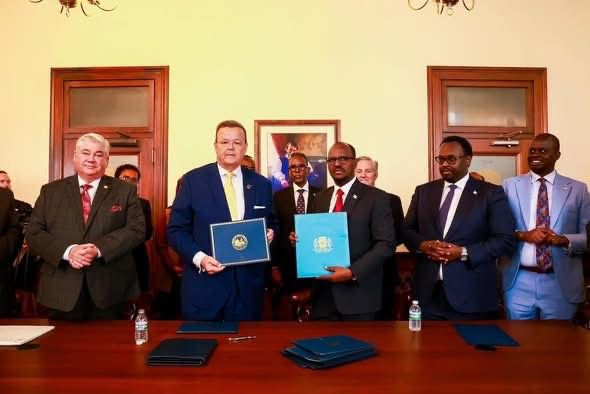
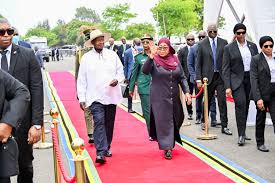
The governments of Uganda and Tanzania have signed a historic agreement to eliminate non-tariff barriers (NTBs) that have long hindered the movement of goods and services between the two neighboring countries.
This move is expected to transform the economic landscape of East Africa. Signed on the eve of the fifth session of the Uganda–Tanzania Joint Permanent Commission (JPC), the agreement demonstrates the commitment of President Yoweri Museveni and President Samia Suluhu Hassan to creating a more integrated and equitable trading partnership.
For several years, traders operating between Kampala and Dar es Salaam have suffered from complex bureaucratic processes, inconsistent standards, and physical road obstacles that have increased the cost of trade.
The new Memorandum of Understanding (MoU) aims to make these inefficient practices a thing of history. Speaking at an official dinner hosted by the Ugandan High Commission in Dar es Salaam, Uganda’s Foreign Affairs Minister, Jeje Odongo, confirmed that a timeline has been set for these reforms.
He stated that the agreement to remove non-tariff barriers will be implemented starting next June, noting that these measures are designed to ease restrictions that slow down the movement of goods and to ensure that bureaucratic processes serve the business community rather than obstruct it.
To ensure the agreement does not remain merely on paper, both countries have pledged to appoint “focal persons” within various ministries, departments, and agencies. These coordinators are tasked with closely monitoring trade routes and immediately resolving any disputes that arise in border areas.
Although bilateral trade between the two countries has grown significantly over the past decade, the relationship has remained unbalanced. Tanzania has enjoyed a trade surplus, as its exports to Uganda have consistently exceeded what it imports from its neighbor.
By removing these barriers, both governments hope to correct this imbalance. This shift is expected to open a smoother path for Ugandan agricultural and manufactured products to enter the Tanzanian market.
Regional economic experts suggest that the “unbalanced trade relationship” mentioned by officials has been a long-standing source of grievance between the two nations. However, by resolving these issues through the Joint Permanent Commission, both countries are moving toward a model where they compete in the global market while working together for regional stability.
The removal of these barriers is expected to significantly benefit small and medium-sized enterprises (SMEs) in particular. If successful, the Museveni-Suluhu agreement is expected to serve as a model for the wider East African Community (EAC).