
As geopolitical tensions in the Persian Gulf continue to reshape international shipping routes, the Djibouti Ports and Free Zones Authority (DPFZA) has provided reassurances to its primary trade partner, Ethiopia.
DPFZA Chairman Abudakar Omar Hadi announced that despite a significant surge in vessel traffic arriving in Djibouti due to the conflict in the Strait of Hormuz, absolute priority will be given to cargo destined for Ethiopia at all port terminals.
The conflict in the Persian Gulf is forcing international shipping companies to seek safer alternatives. Consequently, ports like Jebel Ali, which typically handle these vessels, are seeing a portion of their traffic diverted toward the Horn of Africa. However, Djibouti has stated that it is ready to utilize its strategic location to manage this influx without compromising its existing commitments.
Despite the instability in the Strait of Hormuz, the Chairman emphasized that Djibouti’s geographical position serves as a natural shield. “We are located on the Bab el-Mandeb, and Hormuz is very far away. Djibouti is open to the Indian Ocean,” Hadi told reporters. “Most of the goods passing through our ports essentially come from Asia and Europe. For the time being, neither the Bab el-Mandeb nor the Suez Canal has been significantly affected by the instability in the Gulf region.”
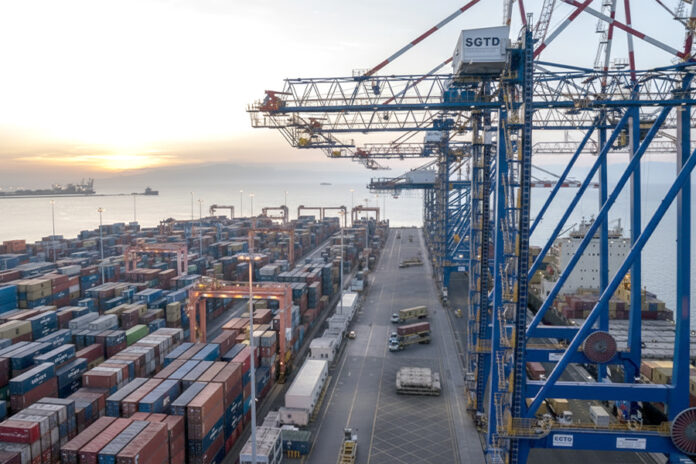
This “always ready” stance is backed by robust infrastructure. With six deep-sea ports currently operational, Djibouti has the capacity to host additional vessels. To prevent potential congestion in inland transport, the authority plans to employ ship-to-ship transshipment strategies. This ensures that the incoming containers do not clog the road and rail networks that are vital for regional trade.
For Ethiopia, which conducts over 95% of its foreign trade through Djibouti, this decision provides a major economic guarantee. This priority status is especially critical for agricultural inputs. “We will give priority to all Ethiopian shipments, particularly fertilizer cargo,” Hadi stated. This measure aims to protect Ethiopia’s food security and agricultural productivity by reducing risks posed by global logistics disruptions.
Despite the proximity of Ansarullah forces in Yemen, Djiboutian officials maintain full confidence in the security of their maritime territory. Because Djibouti’s main port infrastructure is located at the southern entrance of the Red Sea, they believe they are outside the direct maritime attack zone. Interestingly, despite the increased demand for its services, Djibouti has chosen “stability” over aggressive self-promotion.
When asked if now is the time to promote Djibouti as a global transshipment hub, Hadi replied wisely: “We are visible enough; we don’t want to be more visible than this. Being too famous is dangerous.” For now, Djibouti’s focus remains on enhancing operational efficiency and maintaining its unbreakable trade partnership with Addis Ababa, ensuring the Horn of Africa’s economic engine continues to run without interruption even as global shipping lanes shift.