
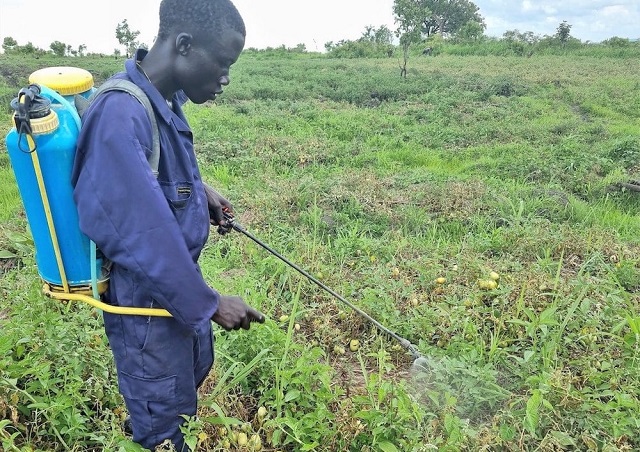
The Ugandan Ministry of Agriculture, Animal Industry and Fisheries (MAAIF) has announced a major regulatory overhaul, setting strict deadlines to phase out several widely used agricultural chemicals to safeguard public health and secure international trade. This directive, issued to CropLife Uganda and licensed dealers, represents one of the most significant shifts in the nation’s agricultural policy in decades.
The decision follows an exhaustive scientific review by the Agricultural Chemicals Review Committee, which determined that many chemicals previously vital to local farming pose “unacceptable risks” to human health and the environment.
To manage this transition, the government has established a tiered withdrawal system, effective immediately. The importation of several high-risk chemicals is now prohibited, with a hard deadline set between mid-2026 and the end of 2026 for their total withdrawal from the Ugandan market.
This list includes the herbicides Atrazine and Butachlor, the insecticides Dimethoate and Alpha-cypermethrin, and the rice-specific herbicide Propanil. For chemicals not facing an outright ban, the ministry has imposed draconian restrictions; for example, Imidacloprid is now limited to coffee pest control and seed treatment, while Fipronil has been stripped of its agricultural license and restricted solely to termite control in construction.
The scientific justification for these measures highlights a grim reality for rural communities and the ecosystem. The review flagged Atrazine as a persistent groundwater contaminant and a potent endocrine disruptor capable of reducing male fertility, while Dimethoate and Diuron were classified as probable human carcinogens linked to neurodevelopmental toxicity.
Beyond human health, the impact on Uganda’s biodiversity was a primary driver for the ban, as chemicals like thiamethoxam were found to be devastating to pollinators. The ministry emphasized that it cannot prioritize short-term pest control at the expense of long-term ecological survival, noting that bees are the backbone of the food production system.
These reforms are also strategically aligned with Uganda’s economic interests, particularly regarding agricultural exports to the European Union and other premium markets. By banning these hazardous substances, the government aims to ensure that Ugandan produce—such as coffee and chili peppers—remains competitive and compliant with international Maximum Residue Limits (MRLs). Despite the crackdown, a temporary reprieve was offered for the fungicide Mancozeb, as no “plausible effective alternatives” currently exist for controlling certain fungal diseases. However, its use will be closely monitored while the industry searches for safer substitutes.