
A deepening rift has emerged between the Ugandan government and the country’s civil society sector following the NRM Parliamentary Caucus’s endorsement of the Protection of Sovereignty Bill 2025. While the government frames the legislation as a necessary shield against foreign interference, non-governmental organizations (NGOs) and human rights defenders warn it could dismantle decades of community development and democratic progress.
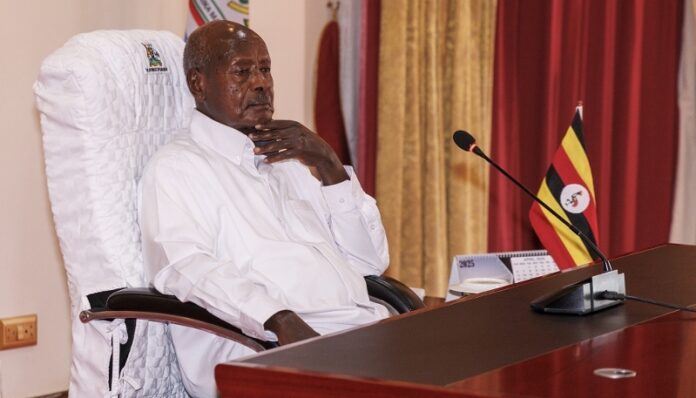
The Bill, which gained significant momentum following a meeting between NRM MPs and President Yoweri Museveni, seeks to operationalize the principle that power belongs to the people as enshrined in the Ugandan Constitution.
According to government officials, the core objective is to regulate foreign financial inflows to ensure that grants and donations do not undermine Uganda’s national security or institutional independence. A government spokesperson emphasized that this is about safeguarding sovereignty and ensuring that funds entering the country are not tied to political agendas that compromise national decision-making.
The government, through the NGO Bureau, has already begun tightening controls by investigating the sources of foreign funds under the guise of fighting money laundering and terrorism financing.
Officials highlight that 95% of Uganda’s NGOs rely on foreign donors, arguing that this extreme dependency creates a national vulnerability that the new law must address. Consequently, the state is pushing for increased tracking and registration of all external resources entering the sector.
Civil society leaders, however, view the bill as a move to suffocate organizations that provide vital services where the state is absent. Sarah Bireete, Executive Director of the Centre for Constitutional Governance, warned that if the bill is not handled with care, it will drastically limit the operating space for NGOs and community-based organizations.
She pointed out that these groups perform essential work in literacy, maternal health, and community development—lifelines for ordinary Ugandans that should not be viewed as political threats.
These fears are rooted in recent history, specifically the exit of the Democratic Governance Facility (DGF) three years ago. When the DGF—a massive donor-pooled fund—was suspended due to government pressure, the financial impact was felt across the nation, affecting even the government’s own regulatory agencies.
This precedent has left civil society leaders skeptical of the government’s claim that the new restrictions are purely for national protection.
As a potential solution, the government has advised NGOs to engage in income-generating activities to become self-sustaining. However, this has proven difficult, with only a handful of organizations successfully establishing commercial arms since the idea was first proposed in 2016. Critics argue that forcing NGOs into the business sector shifts their focus away from their primary mission of serving the vulnerable and marginalized populations.