
The Government of South Sudan, in collaboration with the Food and Agriculture Organization of the United Nations (FAO), has announced a major agricultural conference aimed at transforming vast, underutilized fertile lands into a regional food basket. Organized under the theme
“Investing in Agri-food Systems for Better Life in South Sudan,” this high-level summit is scheduled to take place from May 4–8, 2026. This platform arrives at a critical moment for South Sudan, the world’s youngest nation, which continues to be challenged by deep-seated food insecurity despite possessing one of the most productive ecological zones in East Africa.
During a press briefing in Juba, Deputy Minister of Agriculture and Food Security Lily Albino Akol stated that the conference is not merely a policy discussion but a call to action for fundamental modernization.
Akol added, “This platform creates a unique opportunity to bring together government institutions, the private sector, development partners, and farmers to jointly identify practical solutions.”
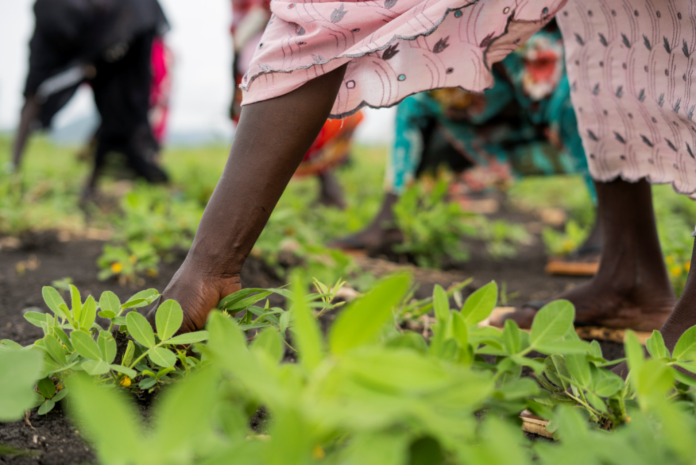
The statistics of South Sudan’s agricultural sector highlight a stark contrast between its immense potential and current reality. World Bank Country Manager Charles Undeland noted that while over 80% of the country’s land is suitable for farming, only 4% to 4.5% is currently utilized. This vast gap has left nearly 10 million people exposed to severe food insecurity. The upcoming summit seeks to close this gap by mobilizing large-scale investment and strengthening Public-Private Partnerships (PPP).
This five-day forum will explore several key focus areas necessary for a robust food system, including diversifying production by giving strategic attention to crops, livestock, fisheries, and irrigation to reduce reliance on rain-fed farming.
It will also focus on climate-resilient innovations to withstand environmental impacts like seasonal flooding and drought, which have historically hindered productivity.
Furthermore, it aims to ensure the transformation is inclusive by facilitating access to technology and credit for youth and women, who represent the majority of the labor force. FAO Representative in South Sudan, Nicolas Kerandi, indicated that the conference would be the final stage for validating investment cases under the global “Hand-in-Hand” initiative.
This UN-supported program specifically focuses on sectors where South Sudan has significant potential, such as sorghum, rice, fish, and livestock.
For years, South Sudan’s economy has been heavily dependent on oil revenues, leaving it vulnerable to global price fluctuations and internal instability.
Experts believe that a successful transition to an agri-food economy could provide the stability required for lasting peace. Deputy Minister Akol added, “Our collective focus is clear: to mobilize investment and accelerate the transformation of South Sudan’s agri-food systems.”