In a move believed to bring significant change to East Africa’s energy sector, Ethiopia and the Russian Federation have officially announced their transition from diplomatic intent to technical implementation regarding nuclear energy development.
During high-level discussions held today in Addis Ababa, the two countries revealed the official signing of a comprehensive Strategic Roadmap for Nuclear Energy Development, aimed at transforming Ethiopia’s “Vision 2063” into a tangible atomic energy reality.
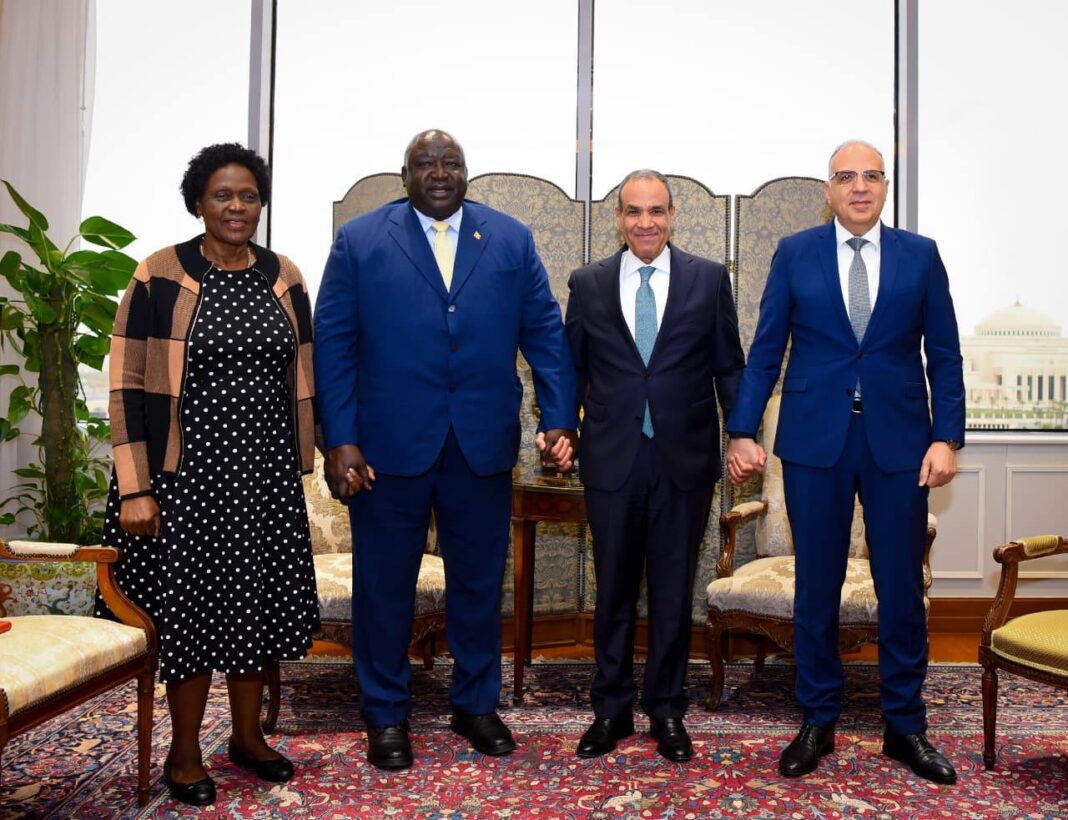
This roadmap, officially signed on March 31, 2026, was the central focus of the meeting between Ethiopia’s Minister of Foreign Affairs, Gedion Timothewos (PhD), and Nikolay Spassky, Deputy Director General of Russia’s State Atomic Energy Corporation (Rosatom).
During the discussion, Foreign Minister Gedion stated that this partnership is not merely a commercial exchange but a continuation of bilateral cooperation that has spanned over a century. The Minister remarked that their long-standing historical relationship has built the necessary trust to launch such strategic projects.
He further noted that the progress achieved since the signing of the initial cooperation agreement in September 2025 has been “exemplary,” commending the speed at which both nations transitioned into a structured implementation plan. He also indicated that Ethiopia’s shift toward nuclear energy is essential for rapid industrial development and to bolster the electricity supply, which currently relies solely on hydropower.
While the 2025 agreement set the stage, the new Strategic Roadmap serves as a practical guide. Sandokan Debebe, Commissioner of the Ethiopian Nuclear Energy Commission, explained that the document details “concrete implementation strategies” to ensure that commitments are translated into actionable projects.
The primary pillars of the roadmap include finalizing technical and economic feasibility assessments and site selection for a large-scale Nuclear Power Plant (NPP), as well as establishing the legal and regulatory frameworks necessary for the peaceful management of nuclear materials.
Additionally, it focuses on human resource development through high-level training for Ethiopian scientists and engineers via Rosatom and explores non-power applications of nuclear technology in agriculture (for pest control and crop yield), medicine (cancer treatment), and various industrial sectors.
Ethiopia currently relies heavily on the Grand Ethiopian Renaissance Dam (GERD). However, as the second-most populous nation in Africa, its energy demand is expected to increase significantly as it strives to become a regional industrial hub. Experts suggest that nuclear energy provides a steady and reliable “baseload” power (24/7) that is superior to hydropower, which can be inconsistent and affected by seasonal droughts. Previous discussions indicate that the project aims to construct two reactors, each with a capacity of 1.2 Gigawatts (GW), with the goal of becoming operational in the early 2030s.
This partnership strengthens Russia’s role as a technology partner for countries in the Global South. Rosatom’s Deputy Director General, Nikolay Spassky, stated that Rosatom is committed to sharing “not just technology, but a culture of safety and transparency.” The roadmap ensures that all activities strictly follow the standards of the International Atomic Energy Agency (IAEA) and are dedicated solely to peaceful purposes.
By diversifying its energy options with Russian assistance, Ethiopia is positioning itself as a pioneer of the “African Nuclear Renaissance,” joining the ranks of Egypt and South Africa in the pursuit of high-tech energy independence. As Commissioner Sandokan Debebe noted, “This agreement is about more than just power supply; it is about the future of Ethiopian science and our standing in the global technological community.”