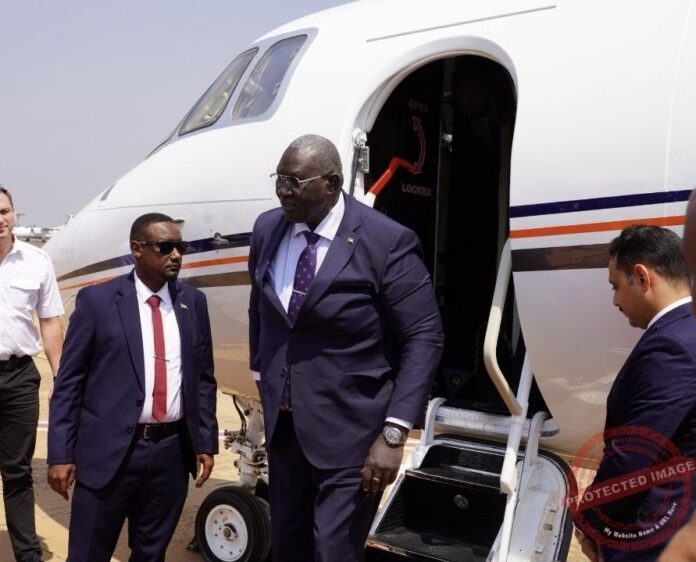
A high-level Sudanese delegation led by Malik Agar, the Deputy President of Sudan’s Sovereign Council, has reportedly cancelled its planned trip to the German capital, Berlin, following an unexpected diplomatic dispute. Diplomatic sources close to the matter revealed that the disruption arose after the German Embassy in Cairo denied entry visas to several members of the delegation.
According to these sources, the German Embassy granted visas to only three members of the group. Information indicates that those approved were the Deputy President of the Sovereign Council, Malik Agar; the Undersecretary of the Ministry of Foreign Affairs, Muawiya Othman; and Ambassador Jamal Malik. Aside from these three senior officials, numerous other members of the delegation failed to secure the necessary German entry visas.
Following this development, Deputy President Malik Agar reportedly decided to cancel the trip entirely, concluding that traveling to Berlin with such a limited number of people would undermine the delegation’s diplomatic weight and core objectives. This decision has cast a shadow of doubt over the diplomatic relations and mutual trust between Sudan and Germany.
Reports indicate that this is not the first time visa restrictions have been imposed on Sudanese officials. It is recalled that the German Embassy in Ethiopia previously denied visas under similar circumstances to representatives of the Sudanese National Forces Coordination, who had planned to participate in the Berlin conference.
This recurring pattern is said to reflect Germany’s stringent visa policy regarding Sudan’s current political crisis and internal conflict. However, pro-Sudanese government factions are criticizing this practice, arguing that it infringes upon national sovereignty and obstructs international dialogues aimed at bringing peace to the country.
Political analysts suggest that this visa bottleneck at the Berlin meeting could further strain relations between Germany and Sudan. At this critical juncture, while Sudan is grappling with internal war and instability, the restriction preventing its high-ranking officials from voicing their perspectives on European platforms has sparked deep resentment in Khartoum.
There are concerns that the cancellation of Malik Agar’s trip might make Germany’s role and its peace-building efforts in Sudanese affairs appear exclusionary. Moving forward, it remains to be seen how the foreign ministries of both nations will respond to this situation.