Kenya is preparing to open a collection of strategically important port and cargo facilities to private investors under a concession programme expected to attract about $1.17 billion (KSh151.9 billion), in one of the most significant shifts in the management of East Africa’s maritime trade gateways.
The programme, structured in two batches, will see the state retain ownership of the underlying infrastructure while private investors finance, develop and operate the facilities under public-private partnerships. The Kenya Ports Authority (KPA) will contribute $60 million (KSh7.79 billion) to the first phase, with private capital covering the remainder.
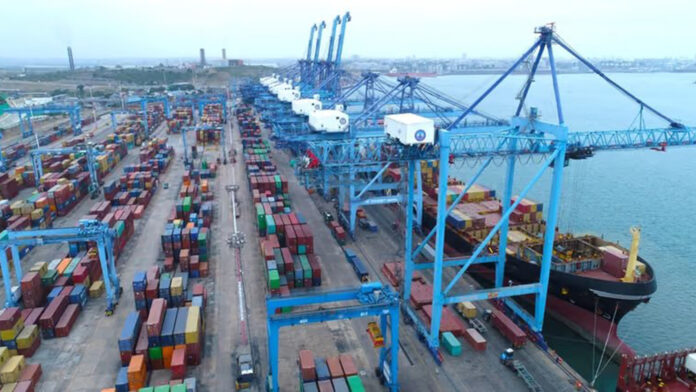
The first batch of concessions is estimated to require approximately $615 million (KSh79.69 billion). It covers Mombasa port berths 11 to 14, Mombasa Container Terminal I, Lamu Container Terminal berths one to three and the Lamu Special Economic Zone. The Treasury approved the feasibility report for this phase in August, clearing KPA to proceed with the tendering process.
A second group of concessions, estimated at about $618 million (KSh80 billion), is also in preparation. It will cover Mombasa Container Terminal II, berths 23 and 24, Mbaraki Wharf, cargo berths one to five and seven to 10, and the inland container depots in Embakasi and Naivasha. Together, the two phases are expected to draw approximately $1.17 billion from private investors, excluding KPA’s planned contribution to the first phase.
The financial details were disclosed by Kenya’s National Treasury and reported by Business Daily on 23 October. Winning investors will also pay concession fees to KPA, although the government has not disclosed the duration of the operating agreements or the expected value of the fees.
Kenya’s Treasury said the assets are operationally connected and share access channels, yards, supporting infrastructure and landside logistics systems. It consequently wants the concessions structured as a portfolio rather than negotiated asset by asset.
“Given the scale of the assets, their shared demand drivers, and the strategic objective of transitioning to a landlord port model, it is necessary that these assets are assessed and structured under the PPP framework on a portfolio basis, rather than through fragmented, asset-by-asset transactions,” the Treasury said.
Under the landlord model, KPA will retain ownership of the land and foundational infrastructure while private concessionaires finance, construct and operate individual facilities. This gives investors long-term access to revenue-generating port operations without transferring ownership of the underlying assets. KPA began testing the model in March 2026 when it started searching for an investor to operate Shimoni fish port.
The concessions could significantly alter the management of Kenya’s maritime trade gateways. Mombasa is the principal port serving Kenya and several landlocked East African economies, including Uganda, Rwanda, South Sudan and parts of the Democratic Republic of Congo. Lamu is central to Kenya’s plan to develop an additional transport corridor linking its northern coast with Ethiopia and South Sudan.
Private investment could expand terminal capacity, improve cargo-handling efficiency and reduce the delays and logistics costs faced by importers and exporters. However, the concessions will also give private operators substantial influence over facilities handling fuel, food, manufactured goods and other cargo moving across East Africa. The structure of the concession fees, tariffs and performance requirements will therefore determine whether users benefit from improved efficiency or face higher charges.
Two important questions remain unresolved: the government has not explained how KPA will finance its $60 million contribution, and the identities of potential private investors have not been disclosed.