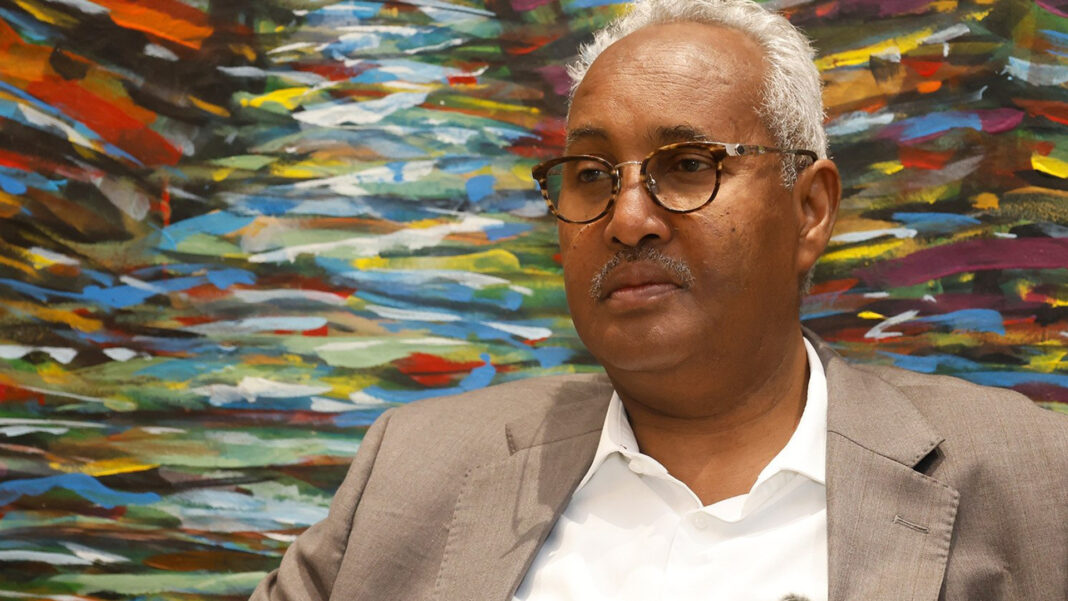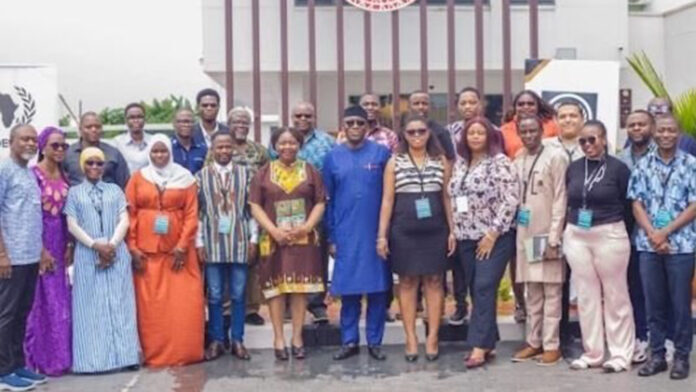
Former Ekiti State Governor, Dr. Kayode Fayemi, has called on African governments to dismantle structural and administrative barriers restricting the movement of people across the continent, warning that stiff border controls severely undermine economic growth and regional integration. Delivering the keynote address at the 2026 Democratic Governance Institute—jointly organized by the Council for the Development of Social Science Research in Africa (CODESRIA) and the Centre for Migration Studies at the University of Ghana—Dr. Fayemi stressed that intra-African mobility is fundamental to unlocking the full potential of continental economic frameworks.
His presentation, titled “Moving Africa: Labour Mobility, Free Movement and the Democratic Governance of Belonging,” examined how cross-border migration, citizenship rights, and labor mobility directly shape democratic governance and the broader African integration agenda.
Focusing on economic cohesion, Dr. Fayemi argued that the continent’s flagship initiative, the African Continental Free Trade Area (AfCFTA), cannot achieve its transformative goals if goods are permitted to flow freely while the human capital driving enterprise and innovation remains constrained by national borders. “At a time when we are working towards a more integrated African market through the AfCFTA, the continued restrictions on the movement of Africans across our borders raise important questions about the kind of continental integration we seek to achieve,” he stated.
He emphasized that commercial expansion relies heavily on skilled professionals, entrepreneurs, and service providers being able to establish operations, seek employment, and reside across partner states without arbitrary administrative hindrances.
Drawing upon regional frameworks established by the Economic Community of West African States (ECOWAS) and the African Union (AU), Dr. Fayemi outlined a comprehensive 10-point policy roadmap aimed at shifting migration management from purely restrictive border control toward holistic governance centered on human rights and democratic belonging.
His proposals call for harmonizing cross-border labor codes to protect migrant workers, accelerating visa-on-arrival and visa-free protocols for African passport holders, creating continental standards for the mutual recognition of professional qualifications, and strengthening bilateral intelligence sharing to ensure safe, legal, and orderly border transitions while addressing transnational security threats.
Dr. Fayemi asserted that the vision of a unified, self-reliant continent outlined in the African Union’s Agenda 2063 will remain unfulfilled if African citizens continue to encounter legal ambiguity, bureaucratic delays, and xenophobic barriers when moving across internal borders.
Urging policymakers to view labor mobility as a primary engine for industrial growth, technology transfer, and regional stability rather than a security risk, he noted “Finally, our vision of African integration should be reflected in the ability of Africans to move, work and belong across the continent with dignity, rights and opportunity.”