
Somalia’s security forces are not yet fully prepared to independently assume the heavy responsibilities currently managed by the African Union Support and Stabilization Mission in Somalia (AUSSOM), according to a newly released report by the International Crisis Group (ICG).
The findings shed light on the fragile security landscape of the Horn of Africa nation as international peacekeeping frameworks approach critical transition timelines. The report underscores that while local forces have made strides in capacity building, persistent structural, political, and operational gaps threaten to undermine long-term stability if left unaddressed.
A central concern highlighted by the ICG is the ongoing reliance of Somali forces on external assistance. Pointing to security operations in the Lower Shabelle region, the report notes that local troops continue to depend heavily on external support to execute and sustain military objectives.
Furthermore, political disputes between the federal government and several federal member states—most notably Puntland and Jubaland—are actively hampering efforts to build a unified, cohesive national military. These fractures at the political level complicate coordinated command structures on the ground.
To navigate these challenges, Somalia has forged bilateral security arrangements with neighboring countries, including Uganda, Kenya, and Ethiopia. According to the ICG, these bilateral agreements could potentially allow troops from these nations to remain stationed in Somalia even if AUSSOM scales down or eventually concludes its mission.
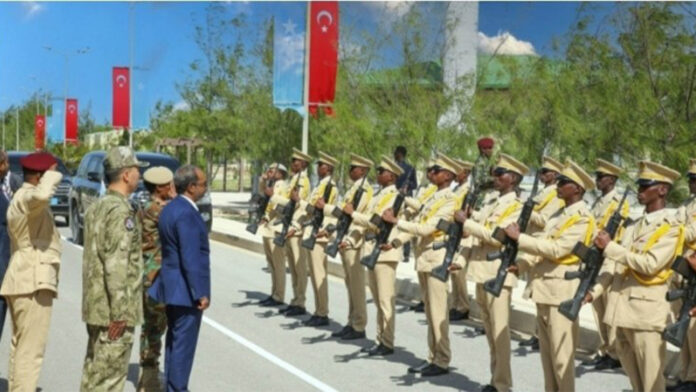
At the same time, international partners are expanding their footprint. Türkiye has taken on a rapidly growing role in Somalia’s security sector, training thousands of Somali soldiers and supplying vital military equipment. Meanwhile, the United States is expected to maintain its independent counterterrorism operations targeting Al-Shabaab militants.
The ICG report issues a stark warning regarding the future of logistics and operational backing. If United Nations support through the UN Support Office in Somalia (UNSOS) comes to an end, AUSSOM could face severe difficulties maintaining its current operational tempo.
Areas vacated by withdrawing international forces could quickly become vulnerable to renewed attacks or strategic attempts by Al-Shabaab to retake lost territory. The report specifically identifies Lower Shabelle and Middle Shabelle as critical regions requiring meticulous security planning. Key towns and vital supply roads in these zones will likely demand dedicated, continuous protection as international drawdowns progress.
Once AUSSOM withdraws, a hybrid security approach involving Somali national forces alongside troops deployed via bilateral agreements could step in to secure these vulnerable corridors.
In light of these pressing concerns, the ICG has issued a direct appeal to the Somali government and its international partners. The organization urges stakeholders to urgently develop a comprehensive new security plan before UNSOS support is completely phased out.