By HER staff reporter
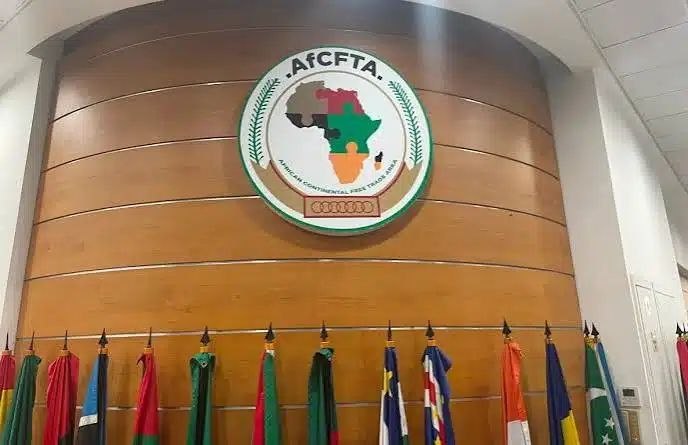
The African Continental Free Trade Area (AfCFTA) Secretariat has entered into a strategic joint venture with Ghana-based Quest Ghana Limited to construct a comprehensive digital trade corridor. This major initiative is designed to accelerate the continent’s ambitious target of more than double intra-African trade, lifting it from roughly $200 billion to $500 billion and beyond.
Valued at $5.17 billion by Quest Ghana—though formal financing commitments or capital figures have yet to be publicly disclosed—the corridor will serve as a foundational technological framework for continental commerce. The project integrates several core pillars, including a digital marketplace, a dedicated African Minerals and Commodities Exchange, a continental interoperable payment system, and supporting logistics infrastructure. These systems are engineered to streamline how businesses trade, track, and settle transactions for minerals and commodities across borders.
The official agreement was finalized in Accra on August 31, following a memorandum of understanding signed earlier in March and subsequent Cabinet approval granted by the Seychelles government in July. Under the terms of the arrangement, Seychelles will provide critical sovereign support for the joint venture and host its operational headquarters in the capital city of Victoria.
AfCFTA Secretary-General Wamkele Mene emphasized that the initiative directly addresses the practical needs of continental enterprises, particularly micro, small, and medium-sized enterprises (MSMEs). By providing robust digital infrastructure, the corridor aims to lower the traditional barriers that have long complicated cross-border commerce among the 55 African Union member states. The project is being actively developed under the umbrella of the AfCFTA Digital Trade Protocol, the overarching regulatory framework governing digital commerce across participating nations.
A primary target of the collaborative effort is Africa’s notoriously fragmented and expensive cross-border payments landscape. The AfCFTA Secretariat estimates that settling intra-African trade currently incurs costs exceeding $5 billion annually, a figure separate from the multi-billion-dollar valuation of the corridor itself. The proposed interoperable payment system is specifically built to reduce these friction costs and simplify settlements across markets that currently rely on disconnected national infrastructures.
AfCFTA officials have clarified that the new payment framework is not intended to replace national foreign-exchange systems. Central banks across member states will maintain complete authority over setting exchange rates; the corridor’s role is strictly to facilitate the movement of payments rather than dictate their monetary value.
Encompassing a market of approximately 1.4 billion people with a combined gross domestic product of roughly $3.4 trillion, the AfCFTA has faced persistent scrutiny regarding its implementation pace since entering into force in 2019. The digital corridor represents one of the most concrete infrastructure investments launched under the agreement to date.
While the partnership between the AfCFTA Secretariat and Quest Ghana establishes who will design, develop, and operate the corridor, several operational specifics remain under wraps. The parties have not yet disclosed a definitive ownership structure, a clear financing plan, or a timeline for the project’s full rollout—details that market investors, trade operators, and financial analysts will be monitoring closely as the venture shifts from agreement to execution.
If delivered at scale, the integrated exchange and payment system could fundamentally transform how goods and financial resources move across African borders. By easing the transit of minerals, commodities, and commercial payments, the digital corridor offers a pathway to unlock the continent’s immense economic potential and foster deeper regional integration.