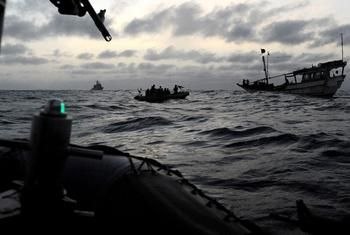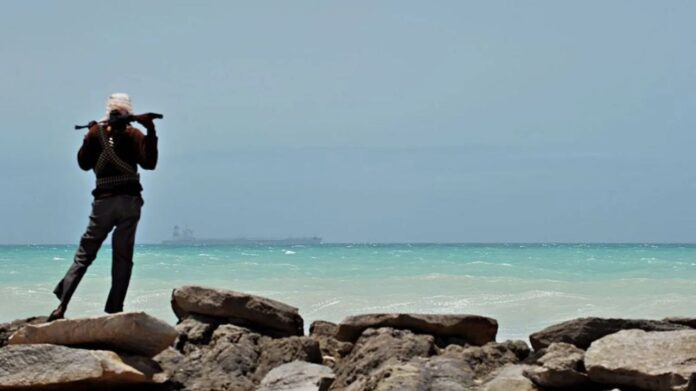
A sharp surge in piracy off the coast of Somalia has pushed security threats in the region to their highest level in more than a decade. Driven by a dangerous convergence of regional conflicts, maritime blockades, and shifting international naval priorities, the recent escalation has alarmed trade organizations, international analysts, and regional governments alike.
The renewed wave of attacks capitalizes on instability further north in key geopolitical choke points. As the United States and Iran remain locked in strategic confrontations over the Strait of Hormuz, and Iran-backed Houthi forces enforce targeted shipping blockades in the Bab al-Mandab Strait, international naval forces have increasingly redirected their assets away from the Somali basin to manage these crises.
Seizing upon this perceived vacuum, opportunistic pirate networks have reemerged with striking velocity. Within a span of four days, two commercial vessels were violently seized in the Gulf of Aden, bringing the total number of recorded attacks since the beginning of the year to at least 13. Among the targeted vessels was the Cameroon-flagged cargo ship MV Lutuf, hijacked off the coast of Somalia’s semi-autonomous Puntland region, and the Eritrean-flagged oil products tanker MT Sibu 1, boarded in waters near Yemen.
The capture of these ships has triggered severe cross-border repercussions. The MV Lutuf, for instance, is currently one of several vessels being held for multi-million-dollar ransoms near the coastal fishing town of Bander Beyla—a historical hotbed for pirate operations. Moreover, reports indicate that the Lutuf was carrying sensitive cargo, including military equipment and satellite gear intended for a Turkish training facility in Mogadishu.
This cargo is widely believed to have provoked unprecedented and lethal drone strikes targeting suspected pirate supply networks along the Puntland coast, killing over a dozen individuals.
These military actions have deeply unsettled regional authorities. Puntland’s administration fiercely condemned the unilateral drone operations by international warships, arguing that foreign airstrikes targeting civilians or local criminal elements undermine broader cooperative security frameworks.
Furthermore, the incident has exposed acute political friction between regional authorities in Puntland and the central government in Mogadishu, complicating a unified response to the maritime crisis.
Experts emphasize that while international naval interventions and private security details successfully suppressed Somali piracy after its peak in 2011—when hundreds of crew members were held hostage—the underlying criminal networks were never fully dismantled. Persistent socioeconomic vulnerability, compounded locally by deep-seated anger over illegal foreign trawling depleting local fish stocks, continues to provide a steady stream of recruits for opportunistic syndicates.
Compounding the crisis, commercial shipping patterns have also shifted. Seeking to evade the acute dangers of the Red Sea conflict zones, many cargo vessels and tankers have altered their routes, passing closer to the Somali coastline. Combined with soaring global oil prices that make high-capacity oil tankers lucrative targets, this heavier volume of vulnerable maritime traffic has created an irresistible window of opportunity for reawakened pirate cells.
Unless broader diplomatic resolutions are achieved in the wider Middle East conflict, or a coordinated and robust international naval deterrent is restored in the western Indian Ocean, experts warn that Somali piracy will continue to escalate. The current trajectory threatens to choke a vital international trade artery, placing maritime commerce, regional stability, and seafarer safety in severe jeopardy.