After more than three decades of heavy dollar dependency, Somalia is taking decisive steps toward reclaiming its monetary sovereignty. The Central Bank of Somalia (CBS) has announced that preparations to reintroduce the official Somali shilling are at an advanced stage, marking what economic analysts call the most significant financial reform in the nation’s modern history.
This ambitious initiative aims to rebuild public confidence, strengthen monetary policy, and restore full financial independence. The strategy centers on a proposed Currency Board Arrangement (CBA) paired with critical amendments to the Central Bank Act, which are currently before Parliament.
Somalia’s monetary crisis stems from the collapse of the Siad Barre government in 1991, when the central bank ceased operations and the national currency effectively died. No new banknotes were officially printed for over twenty-five years.
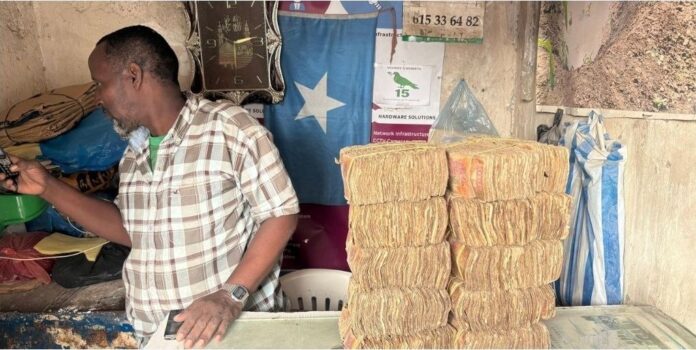
The remaining legal tender—1000-shilling bills printed just before the civil war—gradually degraded into unusable scraps. According to International Monetary Fund (IMF) estimates, a staggering 98% of the physical shillings in circulation became counterfeit, utterly eroding public trust and driving the economy toward extreme dollarization.
The US dollar quickly became the default currency for large transactions, while mobile money platforms dominated daily commerce. Recently, the situation escalated further when businesses and public transport in Mogadishu began rejecting physical shilling notes entirely.
Muse Omar Jama, a currency trader at Mogadishu’s Bakara market for over thirty years, noted the profound impact of the shift. “We are like a country that went bankrupt overnight,” he said. For vulnerable citizens, the total rejection of the shilling has driven up the cost of necessities like food and medicine, leaving those reliant on small cash donations increasingly destitute.
The cornerstone of the reform is the Currency Board Arrangement, designed to anchor the new shilling to a stable reserve currency to control inflation and enforce fiscal discipline. Under a CBA, the central bank must maintain foreign reserves equal to 100% of the local currency in circulation, a safeguard meant to guarantee immediate value and build public trust.
While past initiatives—such as a stalled 2016 relaunch—failed due to political instability and weak institutional capacity, the current crisis has created a fresh consensus for reform.
However, immense hurdles remain. Officials must navigate the logistical nightmare of replacing a multi-billion-dollar shadow economy heavily reliant on US greenbacks, and distribute physical currency through a central bank that currently maintains only six branches nationwide. Regional skepticism, particularly within semi-autonomous regions like Puntland, further complicates the rollout.
Despite these obstacles, the government is pressing forward. Passing the pending legislative amendments will provide the legal foundation necessary to operationalize the Currency Board. If successful, reviving the Somali shilling will transcend standard monetary policy. It will serve as a powerful assertion of statehood, signaling to the world that after thirty years of economic fragmentation, Somalia is finally ready to control its own financial destiny.