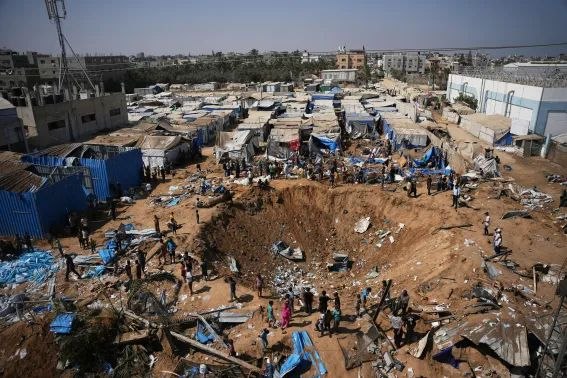
Uganda’s parliament has officially approved a government proposal to deploy troops to Gaza as part of a U.S.-led International Stabilization Force (ISF). This marks Kampala’s first public commitment to the contentious post-war mission, unfolding against a fragile diplomatic backdrop established by U.S. President Donald Trump’s announcement of a Hamas disarmament deal.
Defense Minister Kiryowa Kiwanuka defended the motion by highlighting Uganda’s robust peacekeeping record in volatile regions like Somalia. He argued this expertise uniquely positions the East African nation to help secure Gaza and aid post-war reconstruction. However, the decision has ignited immediate domestic controversy and severe diplomatic friction.
As a majority-Christian nation that maintains membership in the Organization of Islamic Cooperation (OIC), Uganda faces a delicate balancing act. The country’s foreign policy has previously criticized Israeli military operations harshly. In June 2025, Foreign Minister Jeje Odongo condemned Israeli strikes at an OIC summit, labeling them a violation of international law and part of an anti-Muslim scheme, while denouncing attacks on Palestinians. This stark rhetoric contrasts sharply with the defense minister’s portrayal of the deployment as a routine peacekeeping operation.
During parliamentary debates, opposition lawmaker Hassan Kirumira voiced widespread anxiety, bluntly asking, “On which side is our army going to fight?” He warned that the deployment creates severe diplomatic complications tied to Uganda’s OIC status—concerns the government has yet to address publicly.
Proposed by President Trump’s Board of Peace in February 2026, the ISF aims to stabilize Gaza and drive reconstruction. Led by U.S. Major General Jasper Jeffers, the ultimate design is to deploy 20,000 international soldiers alongside 12,000 Palestinian police officers trained in Egypt and Jordan.
Alongside Uganda, Morocco has committed to the mission, deploying four officers to Israel to help establish operational structures. Other nations expected to send forces include Kazakhstan, Albania, Kosovo, and Indonesia—the world’s largest Muslim-majority nation—which has offered up to 8,000 troops.
In July 2026, Israel’s security cabinet approved the ISF’s entry, granting it legal immunity under Israeli law to operate alongside, but outside the direct control of, the Israeli military. Despite opposition from Israeli National Security Minister Itamar Ben-Gvir, reports indicate the ISF has already begun setting up a base near Rafah.
The deployment framework stems from President Trump’s July 30, 2026 announcement that a deal had been secured for the complete disarmament of Hamas, clearing the path for a new Palestinian administration and phased Israeli withdrawals.
Major obstacles, however, threaten the plan. Israeli Prime Minister Benjamin Netanyahu publicly rejected the White House’s framed agreement, stating Israel never agreed to the draft and insisting troops will remain in place until Hamas fully disarms. This contradicts the U.S. framework linking withdrawal to disarmament. Analysts like Wissam Afifa describe the impasse as a structural stalemate: Hamas demands an end to occupation before disarming, while Israel demands disarmament first, reducing the accord to a negotiation framework rather than a workable settlement.
For Uganda, joining a mission spearheaded by the U.S. Board of Peace—criticized by detractors as a parallel United Nations ignoring international charter standards—represents a high-stakes diplomatic gamble in a territory where its own leadership has previously condemned occupying forces.