Sudan’s Ministry of Finance has projected a 9% Gross Domestic Product (GDP) growth rate for the year—a figure that starkly contrasts with cautious international forecasts and the harsh realities of a nation battered by civil war.
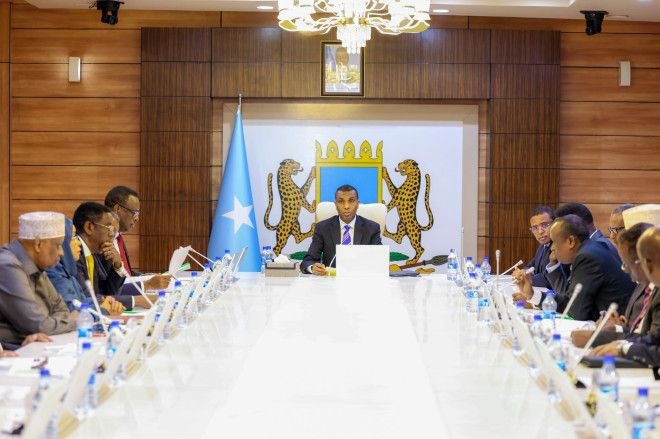
According to state media reports, Minister of Finance Jibril Ibrahim finalized this ambitious target as the cabinet approved an emergency budget designed to cope with depleted state revenues and soaring military expenditures.
The 2026 emergency budget, which Prime Minister Kamil Idris described as a historic “miracle,” aims to achieve nearly 9% GDP growth while simultaneously bringing down average inflation from 101.9% in 2025 to 65%. Officials maintain that this growth will primarily be driven by strategic efforts to horizontally expand the overall tax base without officially raising current tax rates, structural reforms in public finances, and the digitalization of revenue collection through the “Esalat” electronic payment system.
However, these projections sharply contradict conservative estimates from the United Nations. The UN had previously predicted that, following a severe 12% economic contraction in 2023, annual economic growth would not exceed 1.2% through 2043.
Conversely, the International Monetary Fund (IMF) offered a much closer alignment, projecting Sudan’s growth to reach 9.5% in 2026, based on regional economic trends and potential stabilization.
Haoliang Xu, the UNDP Associate Administrator, indicated that Sudan’s economy could register close to 9% growth this year, particularly within the services sector—though he emphasized that sustained recovery relies strictly on achieving lasting peace. While the Ministry of Finance reported that headline inflation dropped to 51.28% in July, independent economists have urged caution. Dr. Magda Mustafa Al-Sadiq, Dean of the Faculty of Economics at Sudan International University, argues that the slowdown in inflation stems not from genuine economic stability, but rather from severely weakened consumer purchasing power driven by ongoing currency devaluation and a rising cost of living.
Reflecting fuel price hikes and severed supply chains due to persistent insecurity, food and beverage inflation surged to 54.49%, while the transport sector recorded the highest rate at 65.89%. The education sector also saw an exceptionally high inflation rate of 268.72% due to school fee revisions.
Beyond macroeconomic policies, the cabinet discussed widespread power outages caused by an electrical line failure affecting Khartoum, River Nile, Northern, and Red Sea states, alongside a devastating transformer fire at the vital Merowe Dam. Energy Minister Al-Mutasim Ibrahim described the failure as “massive and unexpected,” noting that the dam generates over 50% of Sudan’s electricity.
While teams are working around the clock to restore services following the arrival of spare parts, no fixed timeline has been set for full restoration. The power sector has sustained an estimated $14 billion in losses, with generation capacity dropping from around 2,500 megawatts before the war to roughly 1,900 megawatts due to damage inflicted on power plants and transmission grids. This acute shortage has forced countless residents and businesses to abandon traditional grid reliance in favor of expensive private solar power systems.
Despite complex economic and infrastructural challenges, the cabinet reviewed draft bills addressing cybersecurity frameworks, comprehensive data protection, artificial intelligence governance, and broader digital transformation initiatives. These bills will undergo further technical study before being submitted to the Sovereign Council and Cabinet. Economists warn that the 2026 budget remains heavily contingent upon security improvements and revenue generation, noting that the ongoing conflict could undermine efforts to raise revenue and stabilize the economy.