President William Ruto has announced a sweeping overhaul of Kenya’s higher education funding model. Effective September 2026, all students admitted to public universities and tertiary colleges will receive full 100 percent government financing, entirely eliminating financial background barriers for qualified learners.
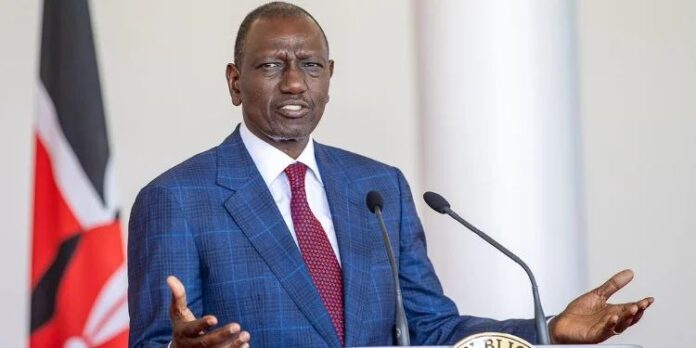
Speaking at State House, Nairobi, President Ruto stated that the reform aims to make higher education universally accessible. Under the proposed framework, every student who meets academic entry requirements and secures placement will be fully backed by the state, replacing the previous needs-based tiered system.
“We have now worked on the university funding model—or, more broadly, the higher education funding model—and going forward, any student who has passed their examinations and has been placed in a college or a university will receive full funding for their higher education,” Ruto declared.
The comprehensive financial backing will extend to universities, technical and vocational colleges, and the Kenya Medical Training College (KMTC). According to the administration, parental contribution will now be strictly optional.
“It will be tchhe choice of parents whether they want to contribute. If they choose not to, we now have a model through which the government will fully fund every child,” the President added, emphasizing that a student’s socioeconomic background will no longer dictate their academic future.
The announcement marks an official departure from earlier financing frameworks, which the administration admitted failed to adequately sustain higher education institutions. The President pointed to the historical struggles of the Differentiated Unit Cost (DUC) model, which saw state funding for universities drop sharply over time from targeted thresholds down to roughly 40 percent, heavily impacting institutional operations.
A subsequent hybrid model—combining parental contributions, state scholarships, and student loans—was introduced to foster equity. However, officials concluded that it still placed an undue financial burden on lower-income households.
By guaranteeing full backing, the state seeks to prevent scenarios where exceptionally qualified students admitted to competitive professional courses—such as medicine and engineering—are forced to abandon their dreams due to prohibitive cost-sharing requirements.
To operationalize the framework by the September 2026 target, the executive has already submitted necessary legislative amendments to Parliament. The administration has urged lawmakers to fast-track adjustments to the Higher Education Loans Board (HELB) Act and related statutes to clear the path for implementation.
The policy pivot is heavily inspired by international education systems in nations that leverage heavy human capital investments to drive national development and economic growth. By removing fees as an obstacle, Nairobi hopes to unlock a broader talent pool to power future industrial and technological sectors.
As the proposal heads to the legislature, the impending shift has sparked widespread public discussion regarding institutional capacity, resource allocation, and the long-term fiscal sustainability of universal state backing across the tertiary sector. Parliamentary debates on the amendments are expected to resume in the coming weeks.