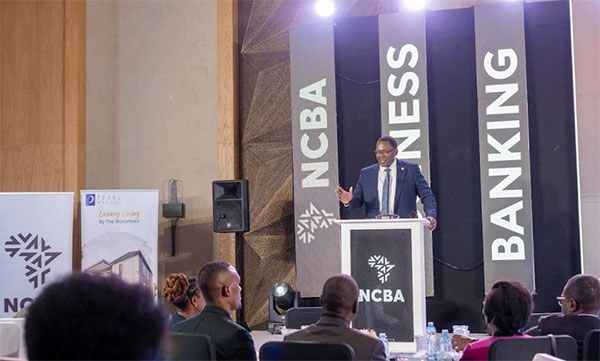
NCBA Bank Uganda has officially launched a comprehensive business banking proposition designed to revitalize credit access for small and medium-sized enterprises (SMEs) across the country. Unveiled alongside the bank’s “Ku NCBA Kiggwa Ku Bwerere” campaign in Kampala, the initiative addresses the persistent challenge of limited credit availability by offering unsecured loans of up to Shs500 million.
Crucially, the lender has committed to a rapid credit decision-making turnaround time of under 48 hours, targeting entrepreneurs who require swift, flexible financing solutions to navigate a highly competitive and subdued economic environment.
Small and medium-sized enterprises represent the backbone of Uganda’s economy, accounting for over 70 percent of private sector activity. Despite their critical importance to national development, these businesses continue to encounter severe bottlenecks, including high borrowing costs, stringent collateral demands, cash flow deficits, and the compounding pressure to modernize their operations.
Mark Muyobo, the Chief Executive Officer of NCBA Bank Uganda, emphasized that this new financial framework is specifically designed to eliminate these long-standing barriers, offering the direct capital, industry expertise, and strategic partnerships necessary to foster sustainable business growth and build entrepreneurial confidence.
Under the newly structured framework, eligible businesses can access a diverse portfolio of unsecured credit options tailored to their specific operational cycles. These offerings include unsecured invoice discounting of up to Shs500 million, unsecured Local Purchase Order financing capped at Shs180 million, and general unsecured business loans of up to Shs200 million.
Furthermore, the bank has integrated specialized education financing of up to Shs500 million and asset financing options that cover up to 90 percent of the total invoice value, thereby providing a comprehensive suite of tools to meet both short-term working capital needs and long-term capital expenditure requirements.
To provide immediate relief to cash-constrained enterprises, NCBA Bank has implemented a complete waiver on transaction charges and loan arrangement fees for a period of six months. By removing these upfront financial burdens, the lender aims to stimulate credit uptake and lower the overall cost of capital during a critical recovery period for local businesses. Additionally, the bank is rolling out enhanced digital banking platforms, specifically NCBA Now and NCBA ConnectPlus, which will allow entrepreneurs to seamlessly manage accounts, authorize transactions, monitor real-time cash flows, and execute payments remotely, integrating modern technology directly into their day-to-day financial workflows.
Recognizing that sustainable business growth requires managerial capacity alongside financial liquidity, NCBA has entered into a strategic partnership with MAT Abacus Business School to deliver an enterprise development program. This collaborative initiative will offer participating SME clients training in critical disciplines such as corporate governance, financial management, bookkeeping, tax compliance, succession planning, and disaster recovery.
Samuel Sejjaaka, the Chief Executive of MAT Abacus, observed that while access to finance remains a major hurdle, many small businesses also struggle with a fundamental lack of operational readiness, making structured training essential to bridging the gap between available capital and bankability.
The holistic banking initiative has garnered strong endorsement from the Kampala City Traders Association, with the organization’s chief executive, Abel Mwesigye, noting that a hybrid approach combining capital with training could revive the subdued borrowing appetite among local merchants.
Mwesigye explained that although liquidity exists within the market, many traders have historically hesitated to borrow due to execution risks and high interest rates. By pairing credit with rigorous advisory services, the initiative is expected to reduce default risks, improve operational efficiency, and encourage more productive capital investment that drives wider macroeconomic transformation.
To ensure businesses can translate their strategic plans into actual execution, the bank is also integrating specialized coaching services alongside regional trade facilitation. Paul Musoke, Managing Partner at Ankolo Consulting, highlighted that bridging the gap between commercial ideas and market implementation is vital for long-term viability.