A Historic Recognition: Memphis Honors the Harari People and Their Enduring Legacy
By Teshome Berhanu Kemal
A Proclamation Beyond Ceremony
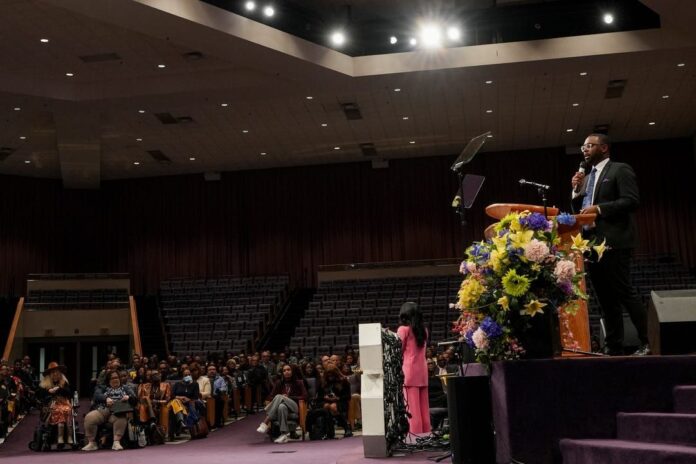
The City of Memphis (Tennessee, USA) written a new chapter in the history of the Harari people by proclaiming the Harari Cultural and Sports Festival an annual city celebration.
This proclamation extends far beyond the formal language of municipal governance. It reaches the very heart of what it means for a diaspora community to receive recognition and validation from its adopted homeland.
When the City of Memphis and Shelby County jointly issued this proclamation on June 27, 2026, they did far more than acknowledge a cultural event on the civic calendar. They performed an act of profound historical significance—one that resonates deeply with the Harari people’s identity, memory, heritage, and enduring sense of belonging.
To those unfamiliar with the depth and richness of Harari civilization, this municipal action might appear to be a routine administrative gesture, similar to the many proclamations issued each year in recognition of cultural festivals, ethnic communities, and civic organizations. For the Harari people, however, this proclamation carries a far deeper meaning. It represents not merely ceremonial recognition but a historic affirmation of one of the world’s oldest living cultures and its enduring contributions to human civilization.
The Foundations of Harari Civilization
For centuries, the Harari people have understood that their identity has been shaped by multiple pillars of cultural achievement.
Their civilization flourished through scholarship that produced some of the Horn of Africa’s most distinguished religious, literary, and intellectual works. It prospered through commerce that linked the peoples of the Horn of Africa with the thriving markets of the Red Sea, the Arabian Peninsula, and the Indian Ocean. It was sustained by a deeply rooted spiritual tradition that provided moral guidance and a strong ethical foundation for community life.
Their literary heritage preserved the collective memory, wisdom, and artistic expression of generations. Their distinctive architecture gave birth to one of Africa’s most remarkable urban landscapes, characterized by the ancient walled city of Harar and its beautifully designed traditional homes. Their language has carried the richness of Harari thought, history, and cultural identity across centuries. Above all, their tradition of peaceful coexistence enabled diverse religious and ethnic communities to live together in mutual respect within the historic walls of Harar for generations.
These enduring achievements have shaped a civilization whose influence extends well beyond its geographical boundaries and continues to inspire admiration throughout the world.
A Recognition of an Enduring Culture
The proclamation issued by the City of Memphis recognizes that this rich and enduring civilization has not only survived the passage of time and the challenges of displacement but has continued to flourish while enriching communities far beyond its ancestral homeland.
In doing so, the City has affirmed an enduring truth: cultural diversity is not a source of division but a vital strength that enriches the social, intellectual, and cultural fabric of American society.
For the Harari community in Memphis, this recognition represents the culmination of many years of dedication, perseverance, and service. Community members have worked tirelessly to preserve their unique cultural identity while making meaningful contributions to the economic vitality, educational institutions, civic organizations, and cultural life of their adopted city.
This remarkable balance between preserving their ancestral heritage and embracing civic responsibility has now received the official recognition it has long deserved. The proclamation therefore stands not only as a tribute to the Harari Cultural and Sports Festival but also as an acknowledgment of the Harari people’s enduring commitment to cultural preservation, community service, and responsible citizenship.
More importantly, it affirms that the legacy of the Harari people continues to inspire respect across cultures, generations, and national boundaries, demonstrating that a community’s history remains a living force when it is faithfully preserved and proudly shared with the wider world.
An Ancient Civilization Honored
The Harari people are among the oldest indigenous communities in the Horn of Africa. Their historic city of Harar has long been recognized by scholars, travelers, and historians as one of Africa’s greatest centers of civilization and one of the most important crossroads of Islamic culture on the continent.
Within this remarkable city, commerce, scholarship, religion, poetry, architecture, and cultural exchange flourished for centuries in an atmosphere that nurtured intellectual curiosity, artistic creativity, and mutual respect.
Throughout the course of history, Harar served as a vital gateway connecting the civilizations of Africa with those of the Middle East and Asia. Its strategic location made it a center of trade, learning, and diplomacy, where merchants, scholars, pilgrims, and travelers exchanged not only goods but also ideas, traditions, and knowledge.
Within its renowned defensive walls, generations of scholars devoted themselves to the study of Islamic jurisprudence, theology, astronomy, literature, philosophy, and poetry. Merchants conducted trade that linked Harar with markets extending from Arabia and India to the interior of Ethiopia. Skilled artisans produced works of exceptional craftsmanship that reflected both indigenous traditions and the cultural influences of distant lands. Religious leaders nurtured a society renowned throughout the region for its learning, tolerance, moral values, and cultural refinement.
For more than a millennium, Harar has stood as a living testimony to the creative genius, resilience, and enduring spirit of its people.
The Living Heritage of the Harari People
The Harari language remains one of the community’s greatest cultural treasures, serving as a living bridge between the present generation and a rich historical past. It preserves not only words but also the worldview, traditions, values, and collective memory of the Harari people.
Harari literature encompasses religious writings, historical manuscripts, poetry, folklore, and oral traditions that celebrate the beauty of Harari life while preserving the wisdom accumulated over many centuries.
Traditional Harari homes demonstrate remarkable architectural ingenuity, combining beauty, practicality, and environmental adaptation in ways that continue to attract admiration from architects and cultural historians alike. The community’s longstanding social institutions have strengthened social cohesion and mutual responsibility across generations.
Harari cuisine reflects centuries of interaction among African, Arabian, and Indian culinary traditions, while its music preserves melodies and rhythms that echo the community’s long and distinguished history. Traditional clothing expresses cultural identity through distinctive designs, colors, and craftsmanship that continue to symbolize Harari heritage wherever Hararis reside.
Despite the profound challenges brought about by political upheavals, social change, and migration, which have dispersed Harari communities across many parts of the world, the Harari people have remained remarkably steadfast in preserving their language, customs, traditions, and cultural identity. At the same time, they have embraced new opportunities and adapted successfully to diverse societies while remaining faithful to their heritage.
The Memphis proclamation honors this extraordinary legacy of cultural continuity, resilience, and adaptation. It acknowledges that the Harari people have succeeded not only in preserving their ancient civilization but also in enriching the cultural life of the communities in which they now live.
The Festival as an Instrument of Cultural Preservation
The recognition of the Harari Cultural and Sports Festival as an annual celebration by the City of Memphis extends far beyond the festival itself.
Throughout history, cultural festivals have served as powerful instruments for preserving collective memory and transmitting cultural values from one generation to the next. They provide opportunities for elders to share their knowledge with young people, strengthen family bonds through shared experiences, and reinforce the values that have sustained communities across centuries.
For children growing up far from their ancestral homeland, such celebrations become living classrooms where history is experienced rather than merely studied. They nurture pride in cultural identity while fostering a deeper understanding of family traditions, language, history, and shared values.
For Hararis living outside Ethiopia, these celebrations assume even greater importance because they:
- create invaluable opportunities for young people born abroad to hear their ancestral language spoken naturally and fluently;
- enable younger generations to experience traditional music, songs, and cultural performances that connect them with their roots;
- preserve the unique flavors of Harari cuisine through family and community gatherings;
- provide living classrooms where history is learned through experience rather than textbooks alone; and
- reinforce the enduring values of hospitality, education, faith, mutual respect, and community service that have sustained the Harari people for centuries.
In this way, the Harari Cultural and Sports Festival serves not merely as an annual celebration but as a living institution dedicated to safeguarding the community’s heritage while preparing future generations to carry it forward with pride and confidence.
Building Bridges Through Celebration
The festival also extends an open invitation to the broader Memphis community to experience the richness of Harari civilization through its music, dance, cuisine, traditional arts, literature, and warm hospitality.
Such cultural encounters foster friendship, mutual respect, and understanding—the very foundations upon which vibrant and diverse societies are built. They remind us that cultural diversity is not simply to be acknowledged but to be celebrated as a source of shared strength and enrichment.
The Memphis proclamation therefore recognizes far more than an annual festival. It affirms the universal importance of preserving cultural heritage while strengthening communities through dialogue, mutual appreciation, and meaningful cultural exchange.
Although this historic recognition was achieved in Memphis, its significance extends far beyond the borders of Tennessee. It resonates with Harari communities throughout Ethiopia, North America, Europe, Australia, the Middle East, and wherever Hararis have established new homes while preserving their ancestral identity.
Across the world, Hararis have worked diligently to safeguard their language, customs, and traditions while making valuable contributions to their adopted societies through entrepreneurship, education, professional service, civic engagement, and cultural enrichment.
The Memphis proclamation stands as a tribute not only to the Harari community of Memphis but also to the enduring contributions of Hararis everywhere, affirming that a people who faithfully preserve their heritage enrich not only themselves but also the societies in which they live.
A Message to Hararis Everywhere
The Memphis proclamation conveys a message of encouragement and hope to Harari communities throughout the world.
It affirms that their heritage matters. It declares that their history deserves recognition and respect. It acknowledges that their contributions continue to enrich the societies in which they live and are worthy of lasting appreciation.
This historic milestone demonstrates that even a relatively small community can attain meaningful public recognition through unity, strategic civic engagement, perseverance, and a steadfast commitment to making its history and contributions visible to the broader public.
It should inspire Harari organizations everywhere to renew their commitment to preserving and promoting their rich cultural heritage. It should encourage them to educate younger generations with greater purpose and intentionality, strengthen partnerships with local governments and civic institutions, and participate actively in the social, cultural, and civic life of their communities.
Recognition begins with visibility.
Visibility fosters understanding.
Understanding cultivates respect.
Respect builds stronger, more inclusive communities that benefit all their citizens.
The Memphis proclamation is therefore more than a local civic declaration; it is an inspiring reminder that communities which preserve their heritage with dignity and confidence ultimately earn the respect and appreciation of the wider society.
The Power of Individual Leadership
Historic achievements of this magnitude are never accomplished by institutions alone. Behind every milestone stand individuals whose vision, dedication, and perseverance inspire others to transform aspiration into reality.
The Memphis proclamation stands as a lasting testament to the outstanding leadership of Nemet Abdulsamad Selman, a young member of the Harari community whose unwavering commitment played a decisive role in making this historic recognition possible.
Through her initiative, determination, and tireless engagement with city officials over many months, she transformed a noble aspiration into a historic achievement. Her efforts demonstrate how the vision and dedication of a single individual can elevate the voice of an entire community and bring its history and heritage to the attention of the broader public.
Her achievement reflects not only exceptional leadership but also a profound sense of civic responsibility and love for her people. She has shown that preserving one’s cultural heritage and serving one’s community are among the highest expressions of public service.
The Harari community therefore extends its deepest appreciation and heartfelt gratitude to Nemet Abdulsamad Selman for her exemplary leadership, selfless dedication, and unwavering commitment. Her accomplishment will inspire young Hararis throughout the world to believe that they, too, can make meaningful contributions to preserving their heritage while strengthening the communities in which they live.
Her success reminds us that the future of the Harari people depends not only upon preserving the achievements of previous generations but also upon empowering a new generation of leaders to carry that legacy forward with vision, creativity, confidence, and an enduring commitment to their cultural identity.
Gratitude to Mayor Paul A. Young
The Harari community also expresses its sincere appreciation to for his thoughtful and meaningful recognition of the Harari people through this historic proclamation.
By acknowledging the Harari people as a community that has developed, preserved, and enriched a remarkable civilization over many centuries, Mayor Young demonstrated an appreciation not only for cultural diversity but also for historical truth that transcends political considerations.
His proclamation recognizes that the Harari people’s centuries-long contributions to language, commerce, scholarship, religion, architecture, literature, and culture continue to enrich contemporary society in meaningful and enduring ways.
By inviting all residents of Memphis to celebrate Harari Day, the Mayor affirmed an important principle: cultural heritage is not the exclusive possession of one community but a shared source of enrichment for the entire city. Such leadership strengthens mutual understanding among people of different backgrounds and reinforces the values of inclusion, respect, and civic unity.
In recognizing the Harari Cultural and Sports Festival as an annual city celebration, the City of Memphis has demonstrated that honoring the history and traditions of one community enriches the cultural life of the entire city.
For this meaningful recognition, and for the respect shown toward one of the world’s oldest living cultures, the Harari community expresses its profound gratitude to Mayor Paul A. Young, the Memphis City Council, Shelby County officials, and all those whose support made this historic proclamation possible.
Their decision will be remembered as an enduring expression of friendship, respect, and appreciation for a people whose cultural heritage continues to inspire generations both within and beyond their ancestral homeland.
Building a Future Through Sister Cities
Historic milestones should never be viewed as the end of a journey. Rather, they should serve as the foundation upon which even greater achievements are built.
One of the most promising opportunities emerging from this historic proclamation is the establishment of a Sister Cities partnership between Memphis and Harar. Such a partnership would transform this moment of recognition into a lasting relationship founded on friendship, mutual respect, cultural understanding, and practical cooperation.
Experience has shown that Sister Cities partnerships are far more than symbolic agreements. When guided by sustained commitment and a shared vision, they become enduring bridges that promote educational exchange, cultural understanding, economic cooperation, tourism, and international friendship.
A formal partnership between Memphis and Harar would open new avenues of collaboration for the benefit of both communities.
Educational exchange programs would enable students, teachers, and academic institutions to learn from one another while deepening their understanding of different cultures and historical traditions.
Cultural exhibitions and artistic exchanges would introduce the people of Memphis to the rich artistic, literary, musical, and architectural heritage of Harar, while offering the people of Harar opportunities to experience the diverse cultural expressions of Memphis.
Tourism initiatives could encourage visitors to discover the unique historical and cultural treasures of both cities, creating new opportunities for economic growth while strengthening international understanding.
Business partnerships could foster entrepreneurship, encourage commercial cooperation, and create mutually beneficial economic opportunities for both communities.
Universities and research institutions could collaborate on scholarly projects addressing subjects of shared interest, including history, cultural preservation, urban development, public health, sustainable development, education, and heritage conservation.
Youth leadership programs could prepare future generations to become ambassadors of friendship, cooperation, and responsible global citizenship.
Schools in Memphis and Harar could organize student and teacher exchanges that cultivate lifelong friendships while promoting intercultural understanding from an early age.
Artists, writers, musicians, and cultural practitioners could collaborate through exhibitions, performances, workshops, and festivals, enriching the cultural life of both cities.
Community organizations, museums, libraries, and cultural institutions could work together to preserve historical heritage while creating innovative programs that celebrate cultural diversity and shared human values.
Such cooperation would transform a single proclamation into an enduring partnership whose benefits would be felt by future generations.
The Global Impact of Partnership
Most importantly, a Sister Cities partnership would help introduce the remarkable story of Harar to audiences far beyond Ethiopia.
For centuries, Harar has stood as one of Africa’s oldest centers of learning, commerce, spirituality, and urban civilization. Yet despite its extraordinary historical significance, its story remains insufficiently known in many parts of the world.
A partnership with Memphis would help bring greater international recognition to Harar’s unique history, magnificent architecture, vibrant cultural traditions, distinguished scholarship, and enduring spirit of peaceful coexistence.
For Memphis, such a partnership would further demonstrate the city’s commitment to international friendship, cultural diversity, and global engagement while creating educational, cultural, and economic opportunities for its residents.
For Harar, it would strengthen international appreciation of one of Africa’s most remarkable historic cities while opening new possibilities for cultural preservation, sustainable tourism, educational cooperation, academic research, and economic development.
More importantly, such a relationship would remind both communities that meaningful partnerships are built not only upon shared interests but also upon shared values—respect, understanding, friendship, and a commitment to learning from one another.
The Responsibility of Each Generation
Recognition alone does not preserve a civilization. It is people—through their daily commitment, sacrifice, and dedication—who preserve culture and ensure its continuity.
It is parents who teach the Harari language to their children in homes where it might otherwise disappear.
It is grandparents who recount the stories of Harar, allowing history to come alive in the imagination of younger generations.
It is teachers and scholars who document the past so that future generations may understand the achievements, struggles, and wisdom of their ancestors.
It is community leaders who organize festivals, educational programs, and cultural activities that strengthen identity and unite people around their shared heritage.
It is artists, poets, musicians, and writers who preserve traditional forms of expression while creating new works inspired by Harari culture.
It is volunteers whose quiet acts of service strengthen community bonds and demonstrate the enduring values of generosity, hospitality, and mutual responsibility.
Above all, it is young people who embrace their identity with confidence, preserving the legacy entrusted to them while preparing it for future generations.
The Memphis proclamation reminds every member of the Harari community that each generation inherits not only the privileges of its cultural heritage but also the responsibility of safeguarding it.
The generations that came before preserved this remarkable civilization despite political upheaval, migration, and profound historical challenges. Their perseverance ensured that Harari language, traditions, faith, literature, architecture, and social values survived into the present day.
The responsibility of today’s generation is equally important.
If they preserve their heritage with the same dedication, wisdom, and foresight, future generations will inherit more than memories of a glorious past. They will inherit a vibrant, living civilization that continues to flourish, adapt, and inspire wherever Hararis make their homes.
In this sense, the Memphis proclamation is not merely a recognition of past achievements. It is an invitation to build an even stronger future—one in which Harari culture continues to thrive while contributing to the shared heritage of humanity.
A Moment for History
Years from now, future generations may look back on June 27, 2026, as more than the date on which a municipal proclamation was signed.
They may remember it as the day when the Harari people received one of the most meaningful public recognitions of their cultural heritage outside their ancestral homeland—a moment when an ancient civilization was formally honored by one of America’s great cities.
This achievement belongs to every Harari family that has faithfully preserved its traditions through times of hardship and change.
It belongs to every elder who safeguarded the community’s history and entrusted it to succeeding generations.
It belongs to every scholar whose research has preserved the memory of Harar’s remarkable civilization.
It belongs to every teacher who has inspired young minds to value their language, history, and cultural identity.
It belongs to every young person who proudly embraces the heritage of their ancestors and carries it confidently into the future.
It belongs to every friend and ally who recognizes that cultural diversity enriches humanity and who works to build communities founded upon mutual respect, understanding, and inclusion.
Most importantly, it belongs to a people who, despite the many challenges of history, have never abandoned their language, traditions, faith, or enduring sense of identity.
The Living Strength of the Harari People
Above all, this historic recognition reminds us that the true strength of the Harari people has never rested solely within the ancient walls of Harar.
Its strength lives wherever the Harari language is spoken with pride.
It thrives wherever families preserve their customs and traditions.
It endures wherever the community extends its legendary hospitality and generosity.
It flourishes wherever parents teach their children to value both their ancestral heritage and the opportunities offered by their adopted homeland.
It grows stronger wherever Hararis contribute to the societies in which they live through education, scholarship, entrepreneurship, public service, professional excellence, and responsible citizenship.
The Memphis proclamation therefore represents far more than the recognition of a cultural festival.
It is the recognition of a people whose history spans more than a millennium.
It is the recognition of a civilization whose achievements in scholarship, commerce, architecture, literature, religion, language, and peaceful coexistence have enriched the history of the Horn of Africa and continue to inspire respect throughout the world.
It is an affirmation that the legacy of the Harari people remains a living force—one that continues to transcend national borders, unite generations, and enrich the shared heritage of humanity.
A Call to Unity and Action
May this historic recognition inspire Hararis everywhere to stand united in their commitment to preserving and promoting their rich cultural heritage.
May it encourage parents to teach their children the Harari language, history, customs, and values with renewed dedication.
May it inspire young people to embrace their identity with confidence, recognizing that cultural heritage is not a burden from the past but a priceless inheritance that shapes the future.
May it encourage scholars, educators, writers, artists, and community leaders to continue documenting, preserving, and celebrating the remarkable civilization of Harar for generations yet to come.
May it strengthen the bonds of friendship among Harari communities throughout the world while fostering deeper understanding and cooperation with the diverse societies in which they live.
May it encourage governments, educational institutions, and cultural organizations to recognize that protecting humanity’s cultural heritage is a shared responsibility that benefits all people.
Finally, may this proclamation serve not merely as a symbol of recognition but as the beginning of an enduring partnership between Memphis and the Harari people—one founded upon friendship, mutual respect, cultural exchange, and a shared commitment to preserving one of the world’s oldest and most remarkable living civilizations.
May future generations look back upon this historic moment with gratitude, knowing that their ancestors not only preserved an extraordinary culture through centuries of challenge and change but also ensured that it was recognized, celebrated, respected, and cherished as an enduring part of humanity’s shared cultural heritage.
In honoring the Harari people, the City of Memphis has affirmed a timeless truth: civilizations endure not merely because of the monuments they leave behind, but because of the values they preserve, the knowledge they transmit, and the people who carry their heritage forward with dignity, wisdom, and hope.
For that reason, the proclamation of June 27, 2026, will be remembered not simply as a municipal declaration, but as a historic milestone in the continuing story of the Harari people—a story of resilience, scholarship, cultural achievement, and an unwavering commitment to preserving one of humanity’s most enduring and distinguished civilizations.