The Japanese government has pledged to provide KSh 3 billion in support to boost Kenya’s vaccine manufacturing capacity. This initiative is expected to be a major catalyst for realizing the country’s national plan to begin domestic vaccine production by 2027.
As announced in Nairobi on July 2, 2026, the funding will be managed by the Kenyan Ministry of Health, with the State Department for Medical Services and the Kenya Medical Research Institute (KEMRI) as the primary beneficiaries. The main objective of this funding is to strengthen vaccine research and manufacturing capabilities by establishing modern research infrastructure and training specialized personnel in the field.
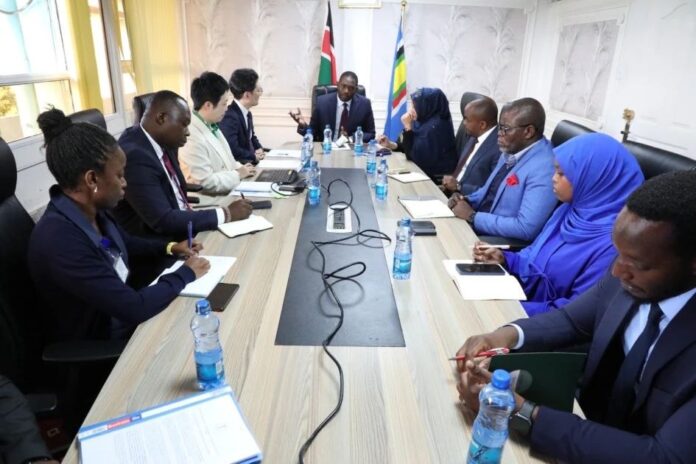
This friendly financial support was unveiled during a meeting between the Head of Kenya’s Medical Services, Dr. Ouma Oluga, the Japan–Kenya Joint Technical Working Group (TWG), and the Chargé d’Affaires of Japan, Hori Tomonobu, to discuss the framework of their bilateral health cooperation. The discussions focused on health sector cooperation, local pharmaceutical production, harmonization of regulatory systems, and health research efforts.
During the meeting, Dr. Oluga noted that this support would go beyond building the resilience of the Kenyan healthcare system; it would play a crucial role in significantly reducing the country’s dependence on imported vaccines. He pointed out that the vaccine supply shortage experienced by African countries during the COVID-19 pandemic clearly demonstrated the necessity of domestic production capacity.
In addition to this funding, Kenya has reached an agreement to implement the “Reliance Process”—a framework that allows for the expedited regulatory review and adoption of medicines approved by Japanese standards. This will enable Kenya to modernize its pharmaceutical manufacturing ecosystem and combat the circulation of substandard and counterfeit medical products in the market.
It is recalled that Kenya recently launched an mRNA technology transfer project in Nairobi in collaboration with the World Health Organization (WHO) and the Medicines Patent Pool (MPP). This project will enable the country to produce its own vaccines for routine immunization, malaria, tuberculosis, and potential future pandemics. The Kenya BioVax Institute is currently receiving the necessary training and support at its Embakasi facility, covering the entire process from research to large-scale production.
This financial support from Japan has provided a major boost to Kenya’s journey toward becoming a center for medical research and vaccine production in Africa. The country is working toward the target of producing its first local vaccines by 2027.