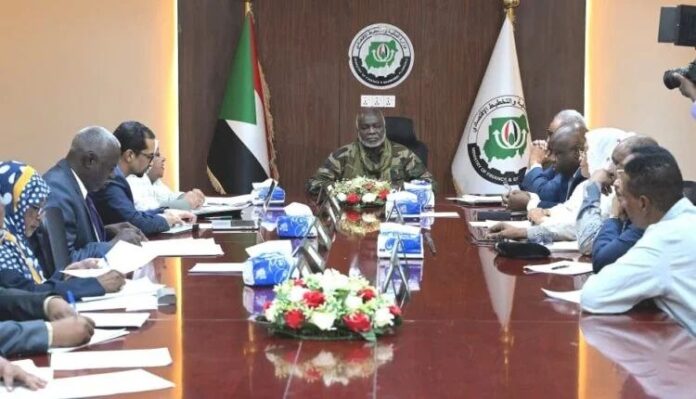
The Economic Task Force, mandated to devise urgent solutions for Sudan’s struggling import-export sector, convened this Thursday under the leadership of Finance Minister Dr. Gibril Ibrahim. The high-level meeting focused on establishing a more robust framework for border trade, with officials emphasizing the need to transform informal commerce into a regulated, state-sanctioned engine for national economic recovery.
Addressing the assembly, Minister of Industry and Trade Mahasin Ali Yaqoub presented a comprehensive report detailing the current state of cross-border activities. Her findings underscored the necessity of a thorough policy review to ensure that commerce with neighboring countries is conducted in a manner that protects Sudan’s sovereign economic interests.
The task force reached a consensus on several critical fronts, most notably the need to overhaul the lists of commodities permitted for exchange through border trade. By refining these lists, the government aims to better align cross-border activity with national production goals and consumer needs. Furthermore, the meeting stressed the importance of seamless integration between federal and state-level government bodies. Improved coordination is viewed as essential for the consistent and effective implementation of new trade policies across all regions.
A significant portion of the discussion centered on the challenge of illicit trade and smuggling, which has long undermined official revenue streams and disrupted the local market. To combat these issues, the task force recommended a major enhancement of the capabilities of oversight authorities stationed at border crossings. The directive calls for stricter monitoring to ensure that all commercial exchange is funneled through official state channels, thereby boosting tax collection and providing the government with better data to manage the national economy.
This meeting is part of a broader, ongoing effort by the Ministry of Finance to stabilize the macroeconomic environment, which has faced severe pressure since the outbreak of conflict. By formalizing border trade, the government hopes to curb the influence of the informal sector, protect local industries, and create a more reliable pipeline for essential goods and foreign exchange.