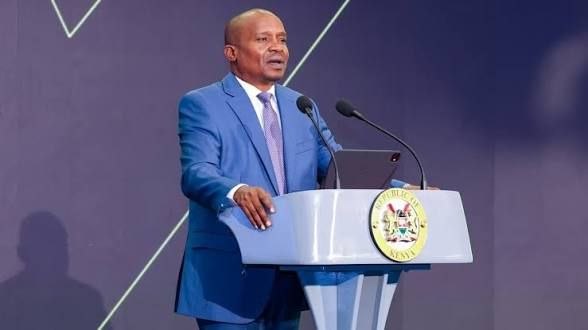
Kenya has issued a strategic call to African nations to prioritize policy consistency and institutional strengthening as the cornerstone for unlocking billions of dollars in global investment. The appeal was made by Deputy President Kithure Kindiki during the opening of the 26th Annual General Meeting (AGM) of the African Trade and Investment Development Insurance (ATIDI).
Addressing delegates in Nairobi, Prof. Kindiki warned that frequent policy reversals and regulatory unpredictability continue to act as a significant barrier to the continent’s economic transformation. He argued that while Africa possesses immense untapped potential, international investors remain hesitant due to risks associated with shifting political cycles and inconsistent fiscal environments.
“We must create conducive environments for investments and believe in our continent. We must ensure long-term stability and policy continuity because, in the past, we have witnessed frequent disruption in policies and investments,” the Deputy President stated. He emphasized that Africa’s future competitiveness in the global capital market is directly linked to the ability of governments to provide a stable, transparent, and predictable framework for business.
The 2026 AGM holds particular significance as it marks the Silver Jubilee of ATIDI. Established 25 years ago by Kenya and other COMESA member states, the institution—formerly known as the African Trade Insurance Agency—has become a pivotal partner in de-risking the African market. By mitigating political and commercial risks, ATIDI has facilitated billions of dollars in trade and investment across the continent. In Kenya alone, the institution has backed over US$7 billion in projects spanning energy, transport, agriculture, and infrastructure, including major initiatives like the Lake Turkana Wind Power Project and the Menengai Geothermal Development.
Beyond advocating for policy reform, Prof. Kindiki highlighted Kenya’s own commitment to fostering sustainable development. He detailed the government’s efforts to establish long-term financing instruments, such as the National Infrastructure Fund, designed to mobilize domestic capital and reduce reliance on expensive external borrowing.
The Deputy President also urged African leaders to adopt an inclusive approach to development. He stressed the importance of carrying the continent’s youth and women along the path of transformation, ensuring that growth is not just measured in macroeconomic figures but in tangible opportunities for all citizens.
“The future belongs to a continent that believes in itself, invests in its institutions, and creates an enabling environment for enterprise to flourish,” Kindiki concluded. As ATIDI celebrates 25 years of delivering “African solutions to African challenges,” the gathering serves as a critical platform for regional leaders to align on a strategy that moves Africa from being a recipient of global capital to a proactive mobilizer of its own economic destiny.