
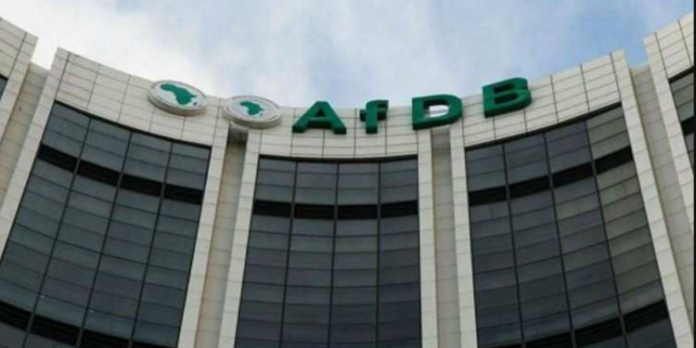
Development Bank (AfDB) will inject $125 million into African Trade and Investment Development Insurance (ATIDI) to attract private capital and significantly scale up guarantee services, the bank’s president, Sidi Ould Tah, announced. This massive capital injection will raise the bank’s shareholding in the agency from its current 3% to 14%, making the African Development Bank the institution’s largest shareholder.
Sidi Ould Tah, who took the helm of Africa’s largest development lender last September, is introducing this new financing model at a time when development aid from developed nations has dropped drastically. Following a near 25% decline in overseas aid to $174.3 billion last year, the United States led the cuts, including to the AfDB’s concessional lending arm.
This new investment is directly tied to a strategic plan dubbed by President Tah as the “New African Financial Architecture for Development” (NAFAD). The initiative aims to tap into an estimated $4 trillion of domestic African capital—including pension funds, sovereign wealth funds, and savings schemes—which is currently fragmented and lacks coordinated management.
This capital is believed to have the potential to bridge Africa’s annual development financing gap, estimated at $400 billion.
Speaking at the bank’s annual meeting held in Brazzaville, Republic of Congo last week, the President stated “Our target is to bring the level of guarantees provided by ATIDI to $10 billion annually. Reaching this target will unlock huge potential for financing infrastructure at scale.”
The agency has previously covered an average of $3 billion worth of investments annually, meaning this new financial boost will triple its capacity.
Headquartered in Nairobi, ATIDI was established 25 years ago with the primary objective of de-risking investments and channeling private capital into riskier markets through insurance and guarantees. The institution is currently owned by 24 African states alongside institutional investors, including Germany’s KfW Development Bank, which joined in April.
The African Development Bank’s move marks a shift away from ATIDI’s traditionally dispersed ownership structure, where stakes were spread across member states in single digits, led by countries such as Togo and Benin. The bank is now urging more African countries and investors to acquire shares to boost ATIDI’s capital and expanding firepower.
Furthermore, France is reportedly considering increasing its shareholding, with more detailed information expected at the Group of Seven (G7) summit in Evian later this month.
On the other hand, some economic analysts argue that African countries should focus on boosting domestic savings rather than relying on external guarantees. World Bank data shows that Sub-Saharan Africa’s savings rate stands at around 18%, which is less than half of the global average—a reflection of low incomes and a predominantly young population.
However, President Sidi Ould Tah remains fully confident that the bank can overcome the continent’s financing challenges. He concluded with a strong message: “Africa can mobilise African resources to finance African development.”