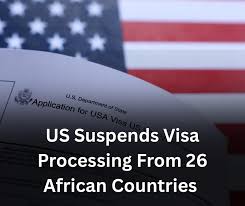
The U.S. State Department plans to drastically slash the number of embassies and consulates in Africa that process visas for foreigners seeking to enter the United States.
This move is expected to further tighten the immigration and travel restrictions already initiated by the Trump administration. Currently, there are nearly 50 U.S. embassies and consulates processing visa applications across the African continent, but this number will be reduced to just 20 in the coming weeks.
According to three U.S. officials and an internal memo obtained by the Associated Press, while an exact date has not yet been finalized, the change is expected to take effect sometime in June.
This new directive, approved last week by Secretary of State Marco Rubio, is part of the Trump administration’s long-standing effort to curb both immigrant and non-immigrant visas.
The policy specifically aims to limit overall immigration to the U.S. and clamp down on individuals who enter the country on temporary visas but overstay their permitted time. Prior to this decision, the administration had already been scaling back personnel at various U.S. embassies and consulates worldwide. During a conference call last Friday, U.S. diplomats, including consular chiefs, were explicitly informed that the United States would be significantly scaling back its visa operations across Africa, concentrating all future visa processing into just 20 designated “hubs.”
This decision will heavily impact applicants from non-hub nations, forcing them to travel across borders into one of the 20 approved countries just to apply for a visa. This new setup adds formidable travel challenges, long delays, and steep financial burdens to an already complex and burdensome U.S. visa process.
Visa processing in Africa has already been under immense pressure due to existing travel bans on certain countries, a requirement for applicants to post up to a $15,000 bond, and recent restrictions tied to the Ebola outbreak.
Consequently, critics and analysts have raised serious concerns regarding fairness, accessibility, and the shrinking diplomatic footprint of the United States across Africa.
Embassies and consulates in non-hub countries will not close entirely, but their operational capacity will be severely limited. These offices will completely halt routine visa processing for foreign nationals and will instead pivot their focus to serving American citizens. Their restricted responsibilities will include managing passport renewals, addressing emergency consular requests, handling special national interest cases, and processing diplomatic visas.
According to the leaked internal memo, the 20 hubs designated to remain fully open for all visa processing are Abidjan, Ivory Coast; Accra, Ghana; Addis Ababa, Ethiopia; Cape Town, South Africa; Dakar, Senegal; Dar-Es-Salaam, Tanzania; Djibouti, Djibouti; Johannesburg, South Africa; Kampala, Uganda; Kigali, Rwanda; Kinshasa, Congo; Lagos, Nigeria; Lome, Togo; Luanda, Angola; Malabo, Equatorial Guinea; Monrovia, Liberia; Nairobi, Kenya; Port Louis, Mauritius; Praia, Cape Verde; and Yaounde, Cameroon.
Analysts warn that this drastic reduction in visa services will ultimately deal a major blow to people-to-people relations, educational exchanges, and business partnerships between the United States and African nations.