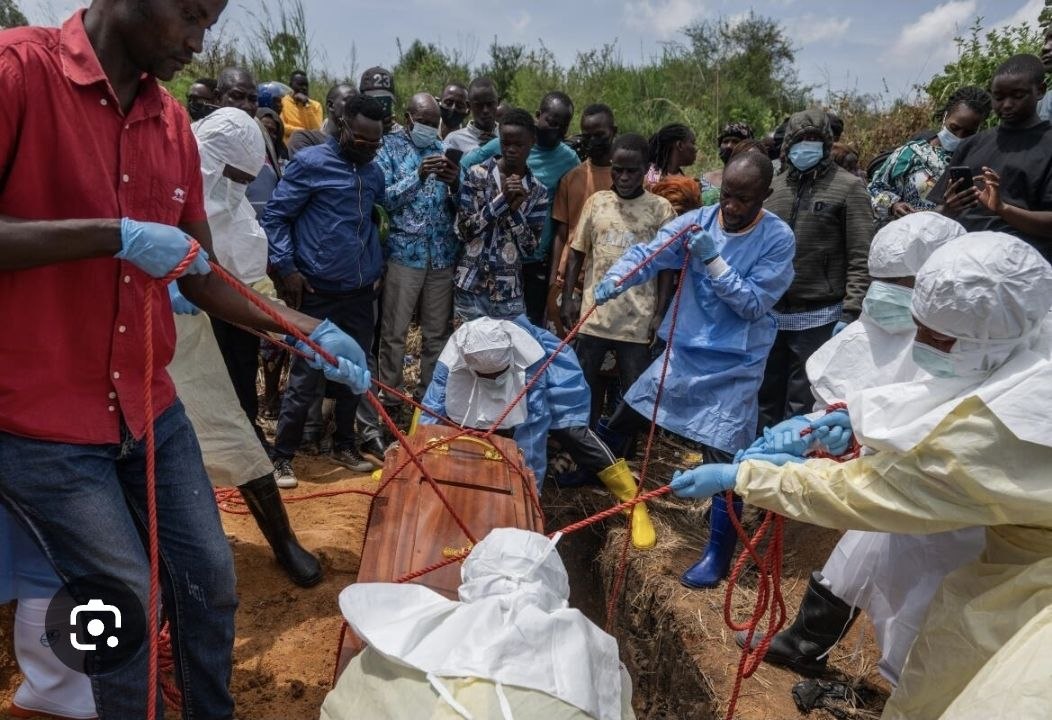
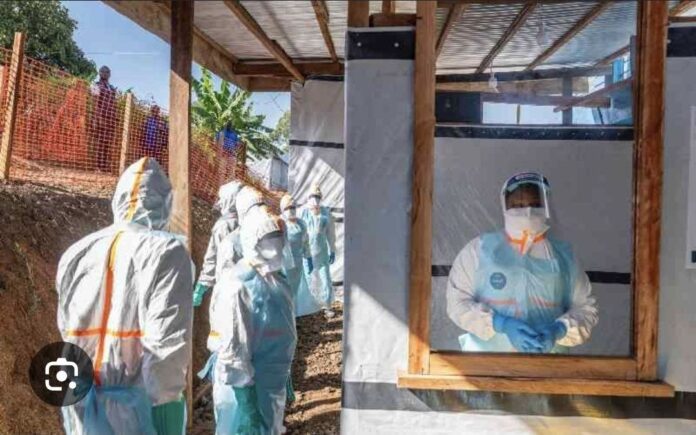
The Kenyan government has approved a request from the United States to open a specialized medical facility in the East African nation to quarantine Americans exposed to the dangerous Ebola virus, senior U.S. officials revealed. This decision was made public just as the Director-General of the World Health Organization (WHO), Dr. Tedros Adhanom Ghebreyesus, was traveling to the epicenter of the outbreak in the Democratic Republic of Congo. However, the move has ignited a massive wave of public backlash among Kenyans, who view the decision as an infringement on their national sovereignty.
While officials at Kenya’s foreign and health ministries did not immediately respond to requests for comment, a U.S. official stated that the agreement grants the United States access to land at a military airforce base in Laikipia, located in central Kenya. The 50-bed unit is expected to become operational immediately. The facility will be staffed and managed by members of the U.S. Public Health Service, a uniformed branch operating under the Department of Health and Human Services.
Health authorities in Congo and neighboring countries are currently locked in a fierce battle to contain the latest outbreak of the rare “Bundibugyo” Ebola strain, for which there is currently no approved vaccine or effective treatment. However, the number of people infected in this outbreak—the third largest on record—is rapidly outpace the speed of the global response. Since the outbreak was confirmed in mid-May, there have been 1,077 suspected cases and 121 confirmed patients, alongside more than 260 suspected deaths. Health experts warn that the true figures are likely much higher.
The WHO has declared the outbreak a public health emergency of international concern. Ahead of flying to Congo, Director-General Dr. Tedros Adhanom Ghebreyesus posted a message of solidarity, stating: “16 times, this country has defeated Ebola. The 17th will be no different. But we must act now, together.”
At this critical juncture, severe funding and logistical shortages are crippling the response. Dr. Jean Kaseya, head of the Africa Centres for Disease Control and Prevention (Africa CDC), told reporters that the $500 million initially pledged globally to support the Ebola response has plummeted to around $290 million. “One day they come and say we commit x million dollars, and the next day they are calling me to say no, it was a mistake,” he said, criticizing Western nations.
While the United States has enforced some of the world’s strictest travel bans to prevent the virus from entering its borders—including temporarily blocking entry for foreign nationals who have recently been in Congo, Uganda, or South Sudan—its decision to isolate its own exposed citizens in Kenya rather than repatriating them home has sparked intense domestic fury.
Davji Bhimji Atellah, Secretary General of Kenya’s Medical Union, strongly condemned the decision, posting on X: “Kenya is a sovereign republic, not a geopolitical isolation ward.” Furthermore, the Katiba Institute, a Kenyan legal advocacy group, has filed a lawsuit challenging the government’s authorization of the U.S. request. Medical experts also warn that such isolation policies could severely discourage American volunteer healthcare professionals from traveling to Congo to fight the outbreak at the frontline, ultimately weakening life-saving operations on the ground.
Armed conflict and transport blockades in Congo have thrown up additional hurdles. Although the UN peacekeeping mission (MONUSCO) has been flying in medical cargo, continued flight restrictions imposed by the Congolese ministry of transport are preventing humanitarian aid workers from freely entering the epicenter of the outbreak.