Addis Ababa, Ethiopia
The Ministry of Water and Energy of Ethiopia has formally called on African nations to strengthen hydro diplomacy in managing and regulating transboundary rivers across the continent.
The ministry issued this urgent appeal while warning that Africa currently faces an annual financing gap of more than 50 billion US dollars for water and sanitation infrastructure development. This call to action was made during the African Union’s 2026 annual summit, held on the 63rd Africa Day, which was specifically dedicated to ensuring sustainable water availability and reliable sanitation systems to achieve the goals of Agenda 2063.
Transboundary water disputes have long posed a major challenge to continental unity and cooperation in Africa. Among the most intensely contested basins are the Nile, Niger, Zambezi, and Senegal rivers. Ethiopia, which contributes over 85 percent of the Nile’s total flow but has historically been excluded from colonial-era water agreements, has emerged in recent years as a leading advocate for a cooperative, equitable, and basin-wide approach to shared water resources.
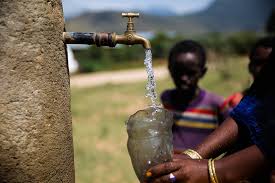
The ministry stated that Africa’s vast water resources must be utilized strategically to improve public welfare and deepen regional economic integration. It emphasized that resolving two deeply interconnected crises—namely, the clean drinking water shortages currently affecting more than 400 million people, and the lack of safely managed sanitation for over 700 million people—depends entirely on the negotiated, collaborative management of these shared waterways.
Motuma Mekasa, State Minister and adviser to the Minister of Water and Energy, noted that Africa is home to 63 international transboundary river basins. These shared basins cover roughly 62 percent of the continent’s total land area and supply 90 percent of its surface water resources.
Despite this natural abundance, Motuma highlighted that only 5 percent of Africa’s water resources have been developed so far, and a mere 29 percent of transboundary basins are governed by operational agreements. He argued that this significant governance and legal framework gap requires a major upgrade in regional water management practices.
To sustain such large-scale water infrastructure initiatives, the ministry urged African nations to restructure their financial frameworks and prioritize domestic funding mechanisms. Officials pointed out that current annual investment in water infrastructure stands between 12 billion and 15 billion US dollars, which falls drastically short of the estimated 50 billion to 65 billion US dollars required.
In this regard, the Grand Ethiopian Renaissance Dam (GERD) was briefly cited as a prime example of a mega-project successfully funded entirely through domestic capacity.
Ethiopia used this case study to urge other African states to commit to financial self-reliance when undertaking large-scale infrastructure projects.
Officials stressed that bridging existing capacity gaps and cooperation deficits is critical, warning that climate change could push an additional 75 million to 250 million Africans into severe water scarcity by 2030. Consequently, the ministry called for institutionalizing collaborative frameworks to resolve water-related disputes collectively, ensuring that shared water resources serve as a foundation for continental unity and economic prosperity rather than becoming a source of geopolitical conflict.