
The United States Department of State, in close coordination with the country’s Centers for Disease Control and Prevention (CDC), has announced that it is providing a rapid and comprehensive response to halt the dangerous Ebola outbreak that has flared up in the Democratic Republic of the Congo (DRC) and Uganda.
To prevent the outbreak from becoming a global threat and to contain it at its source, the U.S. government has allocated an additional $80 million in new bilateral financial assistance. This newly committed funding brings the total amount of bilateral foreign assistance mobilized for this emergency response over the past two weeks alone to more than $112 million.
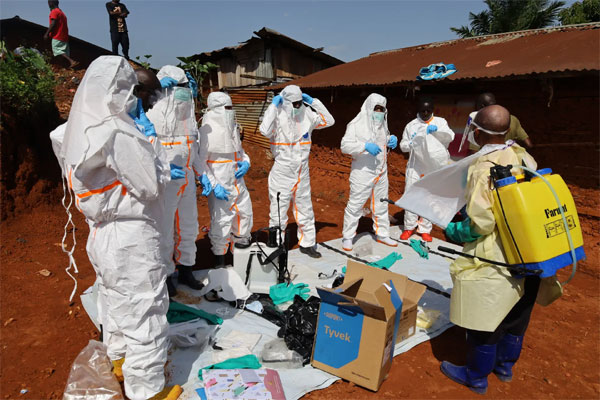
This substantial financial support is specifically designed to protect frontline healthcare workers who are most vulnerable to the outbreak and to break the chain of transmission. The United States will distribute the aid directly to international organizations and non-governmental organizations (NGOs) operating on the ground, and the budget will be directed toward four critical sectors.
The first is the procurement and distribution of Personal Protective Equipment (PPE), where UNICEF and the World Food Program (WFP) will significantly expand their operations to deliver these essential supplies to affected and high-risk areas.
The second focus area is strengthening health screening and surveillance at regional borders. The International Organization for Migration (IOM) will conduct rigorous health screenings at airports, land, and water border crossings.
Alongside this, the organization will work on public risk communication to educate communities on how to protect themselves and to ensure new cases are detected quickly. The third and vital component is contact tracing, which will be implemented through a partnership between Interchurch Medical Assistance (IMA World Health), World Vision, and UNICEF to track individuals potentially exposed to Ebola and prevent the virus from spreading to other communities.
The fourth sector involves boosting diagnostic capacities, with FHI 360 increasing the procurement of Ebola test kits and facilitating the safe transportation of laboratory samples to rapidly confirm cases.
Beyond these measures, the U.S. Department of State has taken further steps to expand medical treatment capacity. In addition to the aforementioned $112 million, the Department has committed $50 million through the United Nations Office for the Coordination of Humanitarian Affairs (OCHA).
This funding will be used to establish and expand up to 50 Ebola response clinics in affected regions. Currently, American response teams have deployed to dozens of healthcare facilities across the DRC’s Ituri, North Kivu, and South Kivu provinces to improve the capacity of Ebola treatment centers and transit units.
Furthermore, to address the broader humanitarian crisis triggered by the Ebola outbreak, the U.S. government has provided an additional $300 million in humanitarian aid to the DRC and Uganda through OCHA pooled funds.
In connection with these developments, the State Department has also advised Americans living in the Middle East and other regions to closely monitor the latest travel and health guidance issued by their nearest U.S. embassies and consulates. This large-scale financial and material backing by the United States is expected to significantly bolster efforts to contain the outbreak within the African region and safeguard global health security.