
Lome, Togo
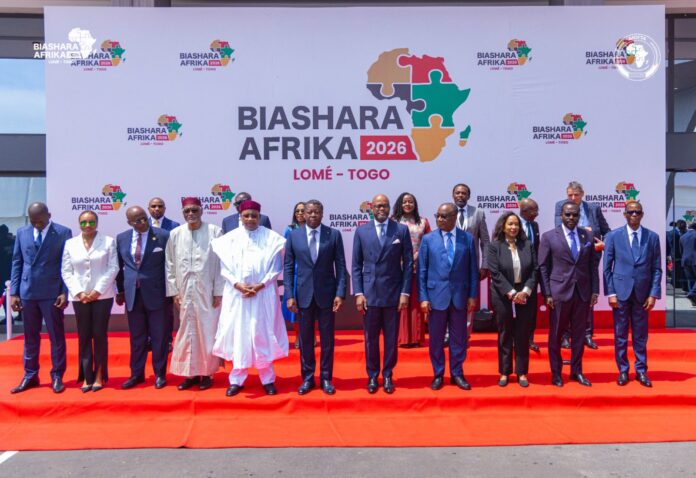
The Commission of the Economic Community of West African States (ECOWAS) announced its high-level participation in the 3rd Edition of the “Biashara Afrika” (Biashara Afrika 2026) Forum held in Lomé, the capital of Togo. This participation was facilitated with the support of the African Development Bank (AfDB)/ECOWAS/UNDP Institutional Support Project (ISP) and the German Agency for International Cooperation (GIZ) Support to ECOWAS in the implementation of the African Continental Free Trade Area (AfCFTA).
The delegation, led by Kolawole Sofola, ECOWAS Director of Trade, representing Dr. Kalilou Sylla, Commissioner for Economic Affairs and Agriculture, brought together representatives of the ECOWAS Trade Promotion Organisation (TPO) Network, Business Support Organisations (BSOs), and selected export-ready Small and Medium Enterprises (SMEs) from member states.
Welcoming participants to the Forum, Badanam Patoki, Minister of Economy and Strategic Monitoring of the Togolese Republic, and Jumoke Oduwole, Nigeria’s Minister of Industry, Trade and Investment and Incoming Chair of the AfCFTA Council of Ministers, underscored the critical importance of translating the AfCFTA agreement into tangible economic opportunities for Africans through coordinated and practical implementation.
Before officially declaring the Forum open, Faure Essozimna Gnassingbé, President of the Council of Ministers of Togo, struck an urgent tone, declaring that “the time of vision must become that of results.” Describing the AfCFTA as a vital instrument of economic sovereignty for the continent, the President called for immediate action to reduce transport costs and dismantle non-tariff barriers (NTBs) to trade.
In his opening remarks, Wamkele Mene, Secretary-General of the AfCFTA Secretariat, highlighted the progress being made in advancing intra-African trade and reaffirmed the central role of the private sector in driving the success of the agreement. He warned that without active business participation to connect markets, progress on the Agreement will remain constrained. Furthermore, he emphasized that utilizing digital trade tools—including digital payment systems, non-tariff barrier reporting mechanisms, and the e-Certificate of Origin—will accelerate Africa’s trade transformation.
Issoufou Mahamadou, former President of the Republic of Niger and AfCFTA Champion, stressed the transformative role of the agreement in promoting industrialization and regional value chains across the continent. He urged African leaders to move beyond the export of raw materials and to prioritize critical infrastructure, technology, and regional cooperation as the foundations of continental industrialization.
The three-day Forum featured extensive thematic sessions spanning agriculture and food security, trade finance, digital payments, standards harmonization, and non-tariff barriers. Discussions identified strategic solutions for integrating smallholder farmers into regional value chains, expanding SME access to trade finance, and aligning national standards with the AfCFTA Protocol on Trade in Goods.
ECOWAS’s participation at Biashara Afrika 2026 forms part of ongoing efforts to enable West African businesses to participate effectively in continental trade. This complemented the Regional Capacity Building Programme on AfCFTA Export Readiness held earlier in May 2026 in Freetown, Sierra Leone, by providing participating enterprises with practical business-to-business exposure and market linkages.