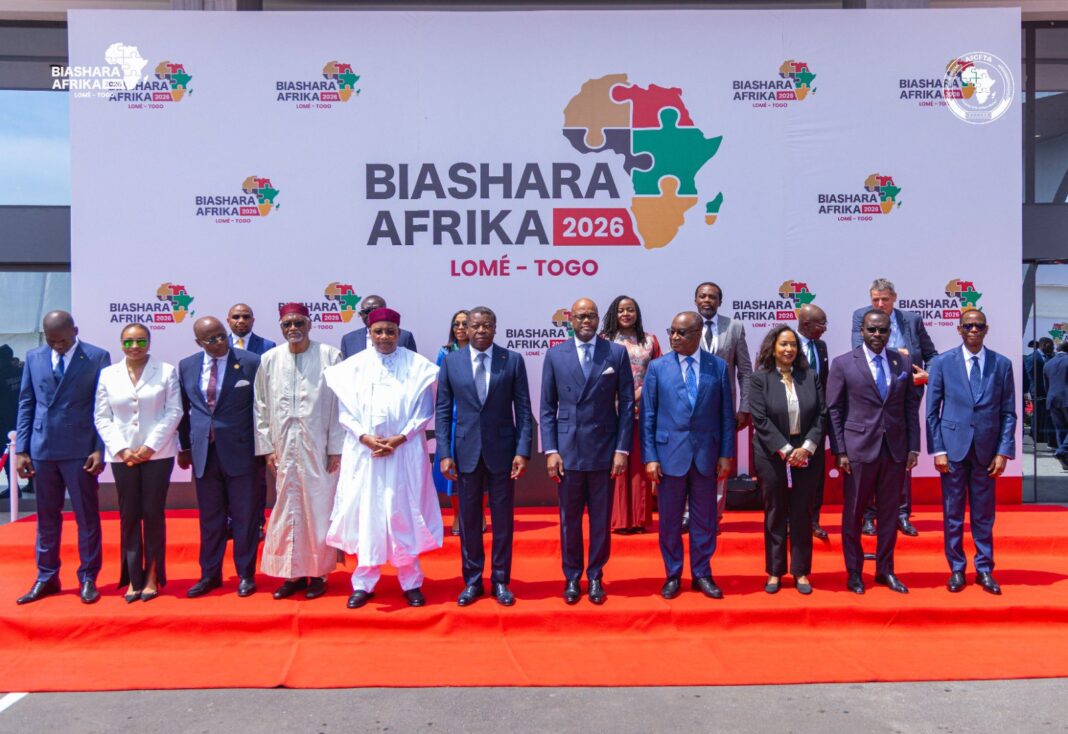

Egypt has been identified as one of the primary beneficiaries of the industrial and trade growth generated by the African Continental Free Trade Area (AfCFTA), according to the bloc’s Secretary-General, Wamkele Mene. The Secretary-General shared these insights during his address at the closing session of the “Biashara Africa 2026” forum held in Lomé, the capital of Togo.
According to the Secretary-General, major African economies with robust industrial bases and extensive export capacities—such as Egypt, South Africa, Nigeria, and Morocco—are already realizing rapid and substantial benefits from the agreement. However, he emphasized that the agreement is designed to be inclusive and equitable, ensuring that all African nations benefit regardless of their economic scale or market diversification.
Wamkele Mene pointed out that the continent still requires significant investment in industrial capacity, infrastructure development, and private sector growth. To bridge this gap, he revealed that the AfCFTA Adjustment Fund has already commenced financing projects aimed at strengthening industrial ecosystems and enhancing market competitiveness across several African nations.
Furthermore, to bring strategic infrastructure projects to fruition, the Secretary-General highlighted strong partnerships forged with the African Development Bank (AfDB) and Africa50.
Notable examples include the construction of Mozambique’s first-ever data center, as well as the establishment of special economic zones in Sierra Leone and The Gambia.
Mene underscored that current global economic headwinds—specifically the European Union’s Carbon Border Adjustment Mechanism (CBAM) and the ongoing uncertainty surrounding the future of the United States’ African Growth and Opportunity Act (AGOA)—serve as powerful indicators that African nations must deepen their internal intra-African trade.
Currently, the combined spending of African consumers and businesses is estimated at approximately $3.4 trillion.
Recent global crises, ranging from the COVID-19 pandemic to the Russia-Ukraine war and escalating conflicts in the Middle East, have taught the continent a critical lesson about reducing dependence on external partners. Consequently, accelerating the creation of a unified African market remains vital, without undermining broader international cooperation.
Addressing energy and climate change, the Secretary-General stated that under the African Union’s green industrialization agenda, the continent is significantly expanding its investments in renewable energy, particularly solar and hydropower.
Following agreements reached at the Africa Climate Summit in Addis Ababa, African financial institutions have committed to mobilizing $100 billion to support green trade, green manufacturing, and renewable energy projects. Despite contributing less than 4% of global greenhouse gas emissions, Africa remains disproportionately impacted by climate change, as evidenced by severe droughts and devastating floods across the Sahel and other regions. In closing, Wamkele Mene emphasized that private sector partnerships are absolutely central to accelerating the continent’s green transition and securing its energy future.