
The global electric vehicle landscape is experiencing a structural realignment, and Africa has emerged as the next high-stakes frontier for commercial transport. Driven by accelerating urbanization, volatile fossil fuel expenditures, and an urgent legislative push toward decarbonization, international manufacturers are racing to capture ground in emerging markets. Indian commercial EV pioneer EKA Mobility is capitalizing on this momentum, spearheading a major East African expansion highlighted by plans for a Completely Knocked Down (CKD) assembly plant in Ethiopia.
For the Pune-headquartered enterprise, this move transcends standard market entry; it represents a calculated alignment with local industrial ambitions. EKA has secured a strategic partnership with Kerchanshe Trading PLC, one of Ethiopia’s most prominent industrial conglomerates, to build out an integrated ecosystem spanning regional distribution, local assembly, and rigorous after-sales support.
By combining EKA’s proprietary EV architecture with Kerchanshe’s deep domestic market intelligence, the venture positions Addis Ababa as a central nexus for sustainable commercial vehicle production in East Africa.
Industry analysts note that Africa’s commercial EV sector remains nascent, presenting a unique window for manufacturers to establish deep-rooted infrastructural partnerships before the market saturates.
Vijay Kumar Yali, president of Export Marketing and SCM at EKA Mobility stated that African transit authorities and fleet operators share a clear mandate: reducing emissions, mitigating import dependency, and modernizing aging public transport networks. EKA’s blueprint explicitly rejects the traditional export-only model, pivoting instead toward localized manufacturing, technical skill transfer, and high-value job creation.
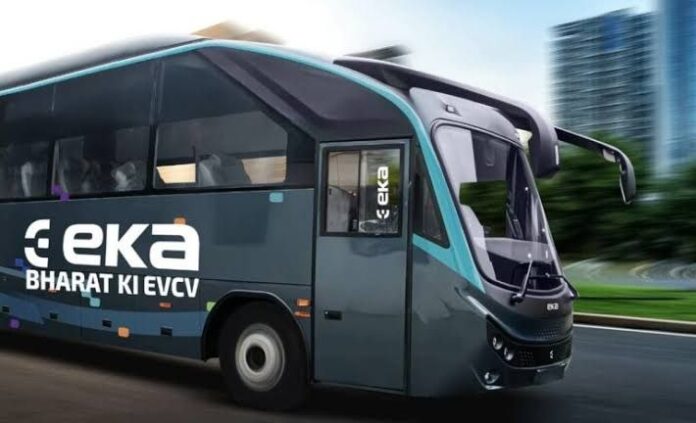
The company’s versatile product matrix—spanning electric buses, light commercial vehicles, three-wheelers, and heavy-duty trucks—is engineered to navigate diverse infrastructural demands. Rather than deploying rigid, uniform vehicle designs, EKA is tailoring its hardware to withstand extreme topographical conditions and heavy-duty operational cycles unique to the continent.
EKA enters an East African market already heavily influenced by established international competitors, particularly Chinese firms that have long dominated low-cost commercial and municipal fleets. Yet, corporate executives maintain that sticker price alone will not determine long-term market leadership.
In the commercial EV sphere, fleet operators measure value through total cost of ownership (TCO), vehicle uptime, and parts availability. By prioritizing long-term reliability, premium build quality, and comprehensive technical training programs over initial pricing concessions, EKA aims to carve out a distinct competitive advantage.
The Ethiopian assembly initiative builds upon immediate regional milestones for the brand, most notably the successful deployment of 15 electric buses to Zanzibar. This flagship municipal rollout serves as a crucial proof-of-concept for zero-emission public transit across East Africa. If these initial fleets continue to yield lower maintenance overhead and reliable day-to-day performance, they are expected to serve as a catalyst for larger municipal tenders across East, South, and West Africa.