
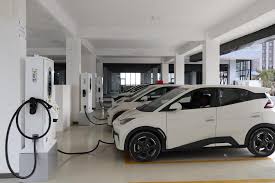
Ethiopia has officially launched its E-Mobility Strategy and Implementation Plan for 2025–2030, marking a major milestone aimed at accelerating the adoption of electric vehicles and building a sustainable transport system nationwide. This new strategy is expected to significantly speed up the country’s transition toward a green and modern transport sector.
Speaking at the launch workshop, Minister of Transport and Logistics Alemu Sime stated that the plan is designed to create a comprehensive, modern transport ecosystem rather than merely introducing electric vehicles to the country. The Minister added that Ethiopia is working resolutely to reduce its heavily increasing demand for imported petroleum products and the corresponding expenditure of foreign currency. He explained that utilizing the country’s vast renewable energy potential, particularly hydropower, to ensure national energy security, mitigate urban air pollution, and improve public health are the core objectives of this strategy.
The plan outlines an exhaustive roadmap that includes policy and regulatory reforms, the deployment of battery charging infrastructure, the integration of electric vehicles into the public transport network, investment incentives, and partnerships with the private sector. It was also noted that Ethiopia’s initiative aligns seamlessly with the African Continental Framework on Electric Vehicles, designed by the African Union to combat climate change and foster sustainable urbanization.
On his part, Minister of Industry Melaku Alebel emphasized that the E-Mobility Strategy is tightly linked with the country’s broader industrial development and environmental sustainability agenda. Pointing to ongoing urban greenery initiatives and active electric bus services as current proof of this commitment, he assured that future efforts will focus heavily on building domestic capacity. Specifically, the Minister explained that expanding local vehicle assembly plants, strengthening the battery value chain, enhancing technology transfer, and establishing specialized training centers for professionals are the fundamental pillars for the strategy’s success.
Attending the launching ceremony, Robert Lisinge, Director of the Development Division at the United Nations Economic Commission for Africa (UNECA), noted that electric vehicle adoption is expanding at a rapid pace across the continent, recognizing Ethiopia as a leading nation in this transition. According to Lisinge, beyond its environmental benefits, electric mobility carries a profound economic impact by easing the financial burden associated with fuel imports. Furthermore, he pointed out that it will generate numerous employment opportunities in vehicle manufacturing, maintenance, and charging station infrastructure services.
The Director affirmed that UNECA—which is currently collaborating with the African Union Commission and the UN Environment Programme on regional policy frameworks and research into intra-African EV trade—will continue to strengthen its support for Ethiopia’s efforts. To successfully execute this grand strategy, a robust inter-ministerial coordination mechanism has been established, and special investment incentives will be implemented in the coming years to fuel the sector’s growth.