The Kenyan government has officially issued a 90-day ultimatum for all foreign nationals operating businesses within the country to obtain or update their legal documentation, including work permits and business licenses. The decision follows a week of mounting economic anxiety, local market friction, and widespread panic among immigrant communities sparked by presidential comments regarding foreign-owned small businesses.
The regularization exercise aims to ensure full compliance with national laws and regional frameworks under the East African Community (EAC) rules governing the movement of labor, goods, and services. According to Presidential Spokesperson Hussein Mohamed, key government agencies will collaborate directly with foreign diplomatic missions to streamline the registration process over the next three months.
“Every person conducting business in Kenya is required to comply with applicable immigration, work-permit, registration, and licensing requirements,” Mohamed stated during an official briefing. He emphasized that the exercise is designed to facilitate orderly compliance rather than force businesses out, adding a clear warning against any threats, harassment, or intimidation targeting foreign businesspeople.
The policy shift comes amid rising tensions between local traders and immigrant entrepreneurs in key urban centers. Local business owners have voiced growing frustration over foreign nationals occupying menial jobs and establishing small retail enterprises, arguing that non-local traders create unfair competition in sectors traditionally dominated by Kenyans.
Acknowledging these grievances last week, President William Ruto confirmed he had received multiple complaints from micro- and small-business operators across the country. In response, President Ruto directed lawmakers to expand a pending bill before Parliament. The directive seeks to establish clear parameters for fair participation by foreign nationals in small businesses while identifying specific economic sectors that may be strictly reserved for Kenyan citizens.
However, the president’s announcement triggered immediate panic across immigrant communities, particularly among refugees and migrant workers from Burundi and the Democratic Republic of Congo. Following the statement, rumors of local crackdowns led to isolated incidents of hostility. Eric Munahayo, a Burundian store owner operating in the suburbs of Nairobi, reported to local journalists that unknown men attacked his shop shortly after the directive was made public.
“I have been living well with Kenyans, I have become part of the community here, and I have the correct licenses,” Munahayo said, reflecting the uncertainty felt by many documented foreign traders across the capital.
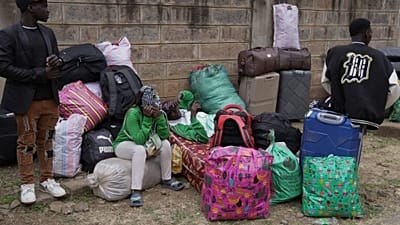
The anxiety drove hundreds of Burundian nationals to queue outside their embassy in Nairobi, seeking urgent documentation updates or making preparations to return home out of fear for their personal safety. Seeking to de-escalate the situation, Foreign Affairs Principal Secretary Korir Sing’oei visited the Burundian Embassy to speak directly with gathered citizens. Sing’oei issued an official apology for what he described as a misrepresentation of the president’s directive, reassuring community members that the registration drive is also intended to protect them.
“We just want to know who you are, where you live, and what you do so that we can provide security even for you all,” Sing’oei assured the crowd.
The diplomatic diplomatic fallout has begun to ripple across the region. While the Burundian government has yet to release an official state commentary, Foreign Minister Edouard Bizimana publicly addressed a widely circulated social media video showing a Kenyan individual making threats against Burundian residents. Bizimana highlighted that Kenyan citizens live and work peacefully in Burundi, warning that continued hate speech could damage bilateral relations and holding the Kenyan government explicitly responsible for safeguarding Burundian lives.
As one of East Africa’s largest and most vibrant economies, Kenya has long served as a hub for foreign investment and regional labor migration. The government now faces a delicate balancing act: protecting the livelihoods of its local workforce while maintaining regional integration and diplomatic stability.