The United States has intervened to mediate high-stakes negotiations between the Somali Federal Government and opposition leaders. Scheduled for May 13, these talks represent a desperate diplomatic effort to avert a constitutional and security crisis, occurring just 48 hours before President Hassan Sheikh Mohamud’s official mandate is set to expire.
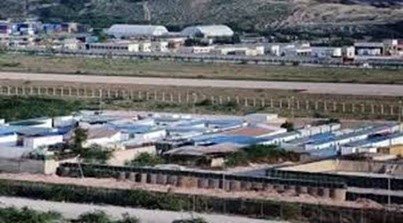
The meeting will take place within the heavily fortified Halane compound at Mogadishu’s Aden Adde International Airport. As the most secure zone in the capital—hosting the U.S. Embassy and various international diplomatic missions—Halane serves as a neutral ground for a dialogue that many fear is the country’s final opportunity to prevent a descent into civil strife.
The federal government will be represented by President Hassan Sheikh Mohamud and Prime Minister Hamza Abdi Barre. Facing them across the table is the Somali Future Council, an opposition delegation featuring heavyweight political figures including Puntland leader Saeed Abdullahi Deni and former President Sharif Sheikh Ahmed.
This breakthrough follows weeks of clandestine diplomacy. Last month, opposition figures formally requested Washington’s intervention, citing a complete deadlock over the country’s electoral model. While the President has championed a transition to a “one-person, one-vote” system to bolster democratic legitimacy, the opposition views the move as a pretense for term extensions, preferring the traditional clan-based indirect voting system to ensure stability.
The urgency of these talks is mirrored by the volatile situation on the streets of Mogadishu. Over the last 48 hours, the capital has taken on the appearance of a war zone. Heavily armed government forces, supported by armored vehicles and tanks, have been deployed to key junctions. These movements were ostensibly to prevent an opposition rally protesting land seizures, but the show of force has only heightened fears of an armed confrontation.
Western diplomats are working feverishly to prevent a repeat of the April 2021 violence, when rival factions within the Somali security forces turned their weapons on each other over similar electoral disputes.
For the international community, the stakes couldn’t be higher. Somalia is currently battling a resilient Al-Shabaab insurgency, and analysts warn that a political vacuum would be a gift to the extremist group. “Somalia cannot afford another prolonged standoff,” noted a regional analyst in Mogadishu. “Renewed instability would reverse years of state-building and distract from the existential fight against terrorism.”