An Ethiopian journalist and postgraduate student has emerged as a winner at a major international forum in Moscow, highlighting growing Global South engagement in shaping the future of digital governance and global connectivity.
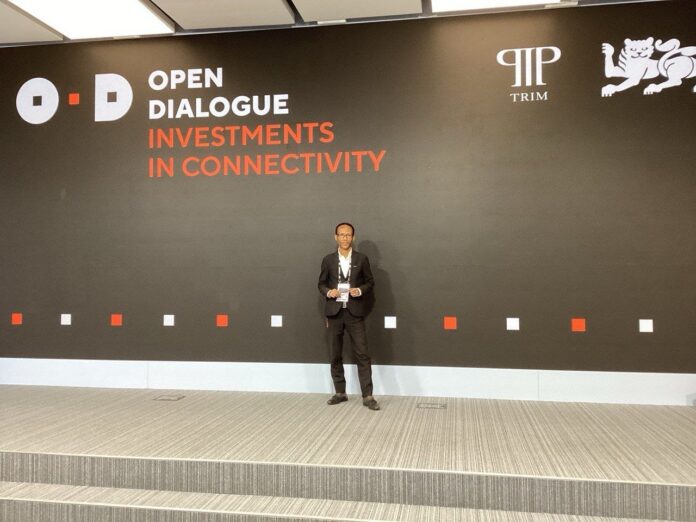
Solomon Garde, a Multimedia Journalism student at Addis Ababa University, secured top recognition in the “Investments in Connectivity” category during the Open Dialogue “Future of the World: New Platform for Global Growth,” held at the National Centre RUSSIA in late April.
The global initiative drew more than 1,600 essay submissions from across the world. After a multi-stage selection process, 306 candidates were longlisted and interviewed, with only 103 finalists advancing to the in-person event in Moscow. Participants represented over 40 countries and a wide range of sectors, including media, academia, public policy, and technology.
Solomon competed among 30 finalists in the connectivity category, presenting proposals focused on digital infrastructure, technological cooperation, and the future of global information systems. Following a full-day closed session on April 27, he advanced to the semifinal round alongside three other participants through a competitive voting process.
The semifinal stage, held on April 28, brought together 16 participants across four thematic categories. Finalists presented their proposals before a broader audience, engaging in rigorous discussions with experts and attendees. Ethiopia’s Ambassador to the Russian Federation, Genet Teshome, and members of the Ethiopian diplomatic mission were among those in attendance.
Solomon was ultimately selected as the winner of the connectivity category through an open audience vote, earning a place in the final high-level plenary discussion alongside winners from other categories.
His winning proposal introduced the concept of “sovereign data mobility” within the BRICS+ framework. The model advocates for secure and cooperative cross-border data exchange systems that preserve national ownership, strengthen digital sovereignty, and enable more equitable value generation from data produced in developing countries.
“The idea is to move beyond extractive data models and create systems where countries in the Global South retain control while still benefiting from global digital integration,” Solomon said in a post-event reflection.
The final plenary session convened senior officials, international experts, and participants to discuss future pathways for global development and cooperation. Among the high-level attendees was Maxim Oreshkin, Deputy Chief of Staff of the Presidential Administration of the Russian Federation, who congratulated Solomon following the discussions.
The forum served as a platform for dialogue on emerging global challenges, particularly in digital governance, media systems, and technological cooperation. For Solomon, the experience also underscored the increasing relevance of voices from the Global South in shaping international policy conversations.
The event comes at a time when debates around data sovereignty, digital infrastructure, and equitable participation in global information flows are gaining momentum, particularly within emerging multilateral frameworks such as BRICS+.