A humanitarian catastrophe is reaching a breaking point in Sudan as the nation enters its fourth year of brutal civil war. According to a harrowing new assessment released Thursday by the Integrated Food Security Phase Classification (IPC), more than 40% of the population—nearly 19.5 million people—is now experiencing high levels of acute food insecurity.
The report paints a grim picture of a nation hollowed out by conflict, detailing that 135,000 people have already plummeted into Phase 5, the highest level on the IPC scale. This category is defined by extreme food gaps, starvation, and a surge in deaths linked to acute malnutrition and disease.
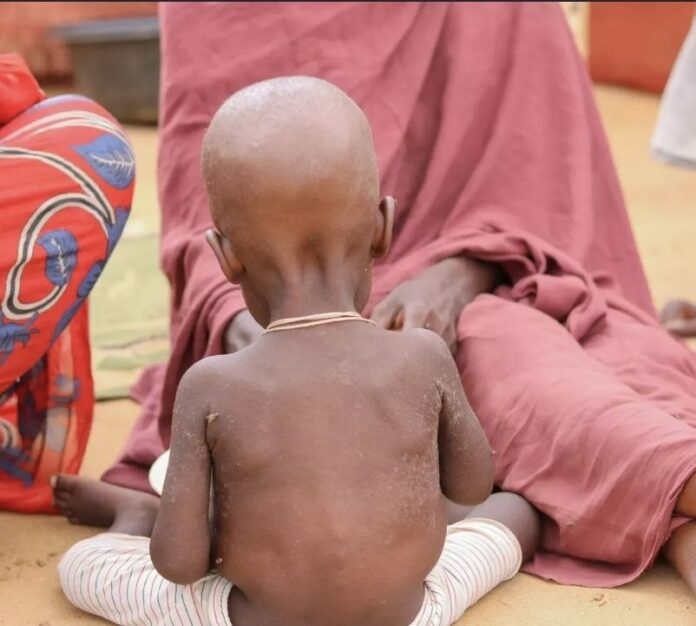
The most vulnerable victims of the gridlock between the Sudanese army and the paramilitary Rapid Support Forces (RSF) are children. The IPC warns that by late 2026, an estimated 825,000 children under the age of five will suffer from severe acute malnutrition. This represents a staggering 25% increase from prewar levels.
While approximately 98,500 children received life-saving treatment between January and March, humanitarian access remains a critical bottleneck. Aid agencies warn that without a cessation of hostilities, the upcoming “lean season” between June and September will likely see these numbers skyrocket as local food stocks disappear.
While the IPC stated that no single area is currently classified as being in a full-scale famine, the margin for error has vanished. Fourteen specific zones across North Darfur, South Darfur, and South Kordofan are officially “at risk of famine.”
“Conditions are expected to deteriorate further,” the IPC statement read, citing the lethal combination of intensified fighting, declining healthcare, and the continued displacement of nearly 13 million people. The report notes that famine was already confirmed last year in the regional hubs of el-Fasher and Kadugli, suggesting that the current “at risk” status is a fragile distinction.
The crisis is being compounded by external geopolitical pressures. Sudanese farmers, already struggling to plant crops amidst active minefields and displacement, are now facing an “expensive and impossible” planting season.
The conflict in the Middle East has throttled supply chains through the Strait of Hormuz, a vital artery for Sudan’s agricultural inputs. Over half of the country’s imported fertilizer is currently stranded on commercial ships. Consequently, fuel prices for irrigation pumps and tractors have surged by 30%, making it financially unviable for many to farm.
Since the war ignited in April 2023, at least 59,000 people have been killed. Today, with over 30 million people in need of assistance, Sudan stands as the site of one of the world’s largest—and most underfunded—humanitarian disasters. Without an immediate surge in international aid and a diplomatic breakthrough, the “breadbasket of Africa” faces a future defined not by harvest, but by hunger.