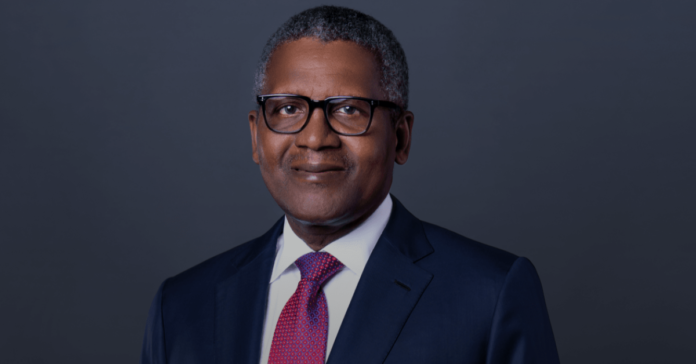
Africa’s wealthiest man, Aliko Dangote, has announced plans to launch his next major industrial investment in Kenya. The Nigerian billionaire and Chairman of the Dangote Group revealed his interest in constructing a $17 billion oil refinery in the coastal city of Mombasa, modeled after his massive facility in Lagos, Nigeria, which processes 650,000 barrels of oil per day. First disclosed in an interview with the Financial Times, this announcement is expected to be a major turning point for East Africa’s energy security. For decades, the region has been nearly 100% dependent on international supply chains, importing refined petroleum products primarily from the Middle East.
The proposal comes amid heighted speculation regarding where the Dangote Group would invest within East Africa. While there were previous discussions among East African Community (EAC) leaders—specifically President William Ruto and Tanzanian President Samia Suluhu Hassan—about potential collaboration at the Port of Tanga in Tanzania, Dangote appears to have made his choice.
“I am leaning towards Mombasa because it has a very large and deep port,” Dangote stated. Beyond geographical advantages, his decision is driven by market demand, noting that “Kenyans are high consumers; it is a large economy,” highlighting the significant demand for fuel, bitumen, and petrochemicals in Kenya, the region’s primary economic hub.
The timing of this project is critical. Ongoing conflicts involving the United States, Israel, and Iran have caused high volatility in global oil markets and disrupted shipping in the Red Sea, leading to surging fuel prices and occasional shortages across East Africa.
By replicating the Lagos model, this integrated refinery aims to achieve energy sovereignty by reducing reliance on unstable Middle Eastern imports, lowering costs by eliminating high freight and insurance expenses associated with long-distance shipping, and creating tens of thousands of local jobs during construction and thousands of permanent technical roles once operational.
Despite his clear preference for Kenya, Dangote emphasized that the final decision rests on political will. “The ball is now in President Ruto’s court. I am ready to do whatever President Ruto says,” he remarked. President Ruto has been a vocal supporter of private-sector-led infrastructure; during a recent summit in Nairobi, he expressed readiness to embrace “transformative partnerships” to make Kenya a regional energy hub. However, a project of this magnitude will require more than just talk—it necessitates significant land agreements, tax incentives, and guarantees for crude oil supply.
While a $17 billion investment represents a substantial portion of Kenya’s GDP, and some critics point to the regulatory hurdles and currency fluctuations Dangote faced in Nigeria as a warning, the success of the Lagos refinery—which has already begun exporting fuel to European and African markets—serves as a powerful proof of concept. If the Kenyan project moves forward, it will not only serve the domestic market but also position Kenya to supply refined products to landlocked neighbors like Uganda, Rwanda, and South Sudan via the Northern Corridor.