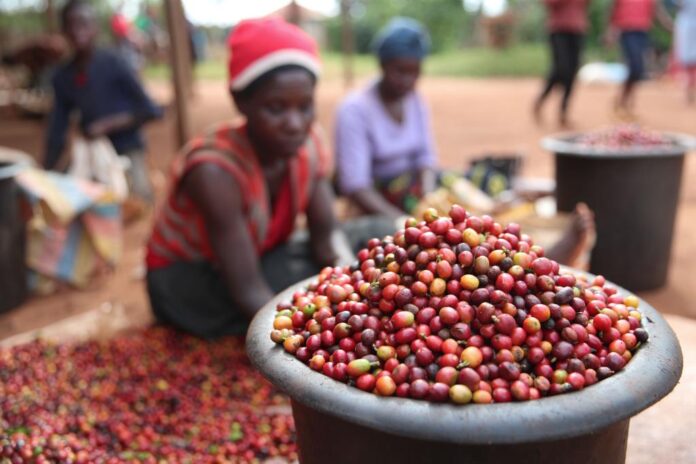
The Kenyan coffee sector has reported remarkable revenue growth over the past six months. According to data released by the Nairobi Coffee Exchange (NCE), farmers and industry stakeholders earned a total of 24 billion Kenyan Shillings (approximately $186 million USD**) during the first half of the current marketing season.
This significant financial success is attributed to rising international demand for Kenyan coffee, an increase in the volume of coffee supplied, and improved sales prices. This recovery is seen as a sign that the country’s coffee value chain—which has been tested for years by fluctuating prices and declining production—is returning to a stable growth trajectory.
The Nairobi Coffee Exchange remains the backbone of Kenya’s coffee trade. According to the report, high-quality grades, specifically ‘AA’ and ‘AB’, dominated the market share and led the way in securing premium prices. Weekly auctions consistently recorded transactions ranging from 1.4 billion to 2.5 billion Kenyan Shillings, with figures occasionally spiking based on product quality and increased competition among bidders.
Industry experts suggest that the primary drivers of this success are rigorous quality control at the farm level, improved processing technologies, and the preservation of the unique flavor and aroma that Kenyan coffee is known for globally. These factors have ensured high acceptance among international buyers, driving competitive bidding even amid price fluctuations.
Despite the encouraging overall revenue, concerns remain regarding the unequal distribution of benefits across the sector. While some farmers’ cooperatives and private estates have capitalized on the high prices, others continue to struggle with high production costs, climate change impacts, and complexities within the marketing system.
To bridge this gap, the Kenyan government and industry regulators are introducing various reforms. These initiatives aim to increase the farmers’ share of earnings, ensure transparency in the auction process, and eliminate intermediaries so that revenue reaches producers more directly. If these reforms prove successful, the coffee sector is expected to stabilize further and play a vital role in boosting the country’s foreign exchange earnings.